Why the paid media market moves faster than teams can react
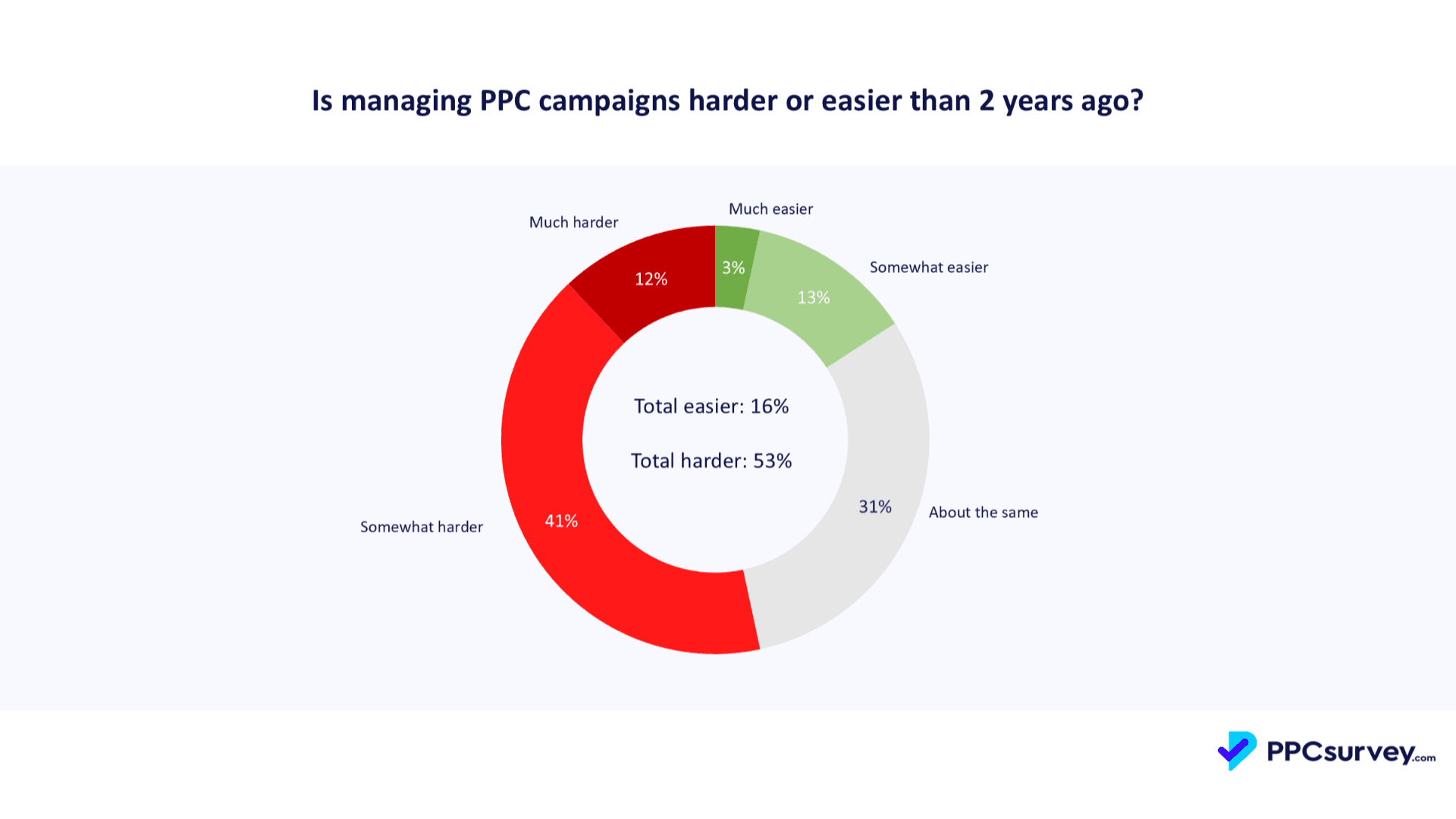
53% of PPC professionals say the job is harder than it was two years ago. The reason is not a skills gap: purchase intent now forms across more surfaces than any team can watch.
A Search Engine Land survey did the rounds back in March, but the headline stat is worth staying with. 53% of PPC professionals say the job is harder than it was two years ago, and only 16% say it's become easier. However you slice that, 84% of the industry is standing still or losing ground, and this is after two years of AI tools that were supposed to make everything simpler.
So what's actually going on?
Purchase intent used to form somewhere you could watch: a search, an ad click, maybe a comparison site. Now it forms across search, social, and increasingly a conversation with an AI answer engine (AEO), often before anyone's touched an auction you can actually see. By the time a bid adjustment reflects what a team noticed, the moment that mattered has usually already passed.
Automated bidding, PMax and Advantage+ stopped being optional extras somewhere in the last couple of years. They're not a shortcut anymore. They're closer to how the market itself moves now, whether we signed up for that or not.
This changes the paid media manager's job.
It's less "who can react fastest in platform," more "how do we direct what the system is allowed to do."
- What are the signals we feed it?
- What is it optimising toward?
- Where are the lines it isn't allowed to cross?
This is an evolving skill set. As the technology that drives purchase intent evolves, so does the skill set to support the underlying technology.
Getting that right is what the shift actually looks like day to day. See how Rubin reads live intent signals.
The teams handling this well aren't white-knuckling the old way of working. Most of them have stopped trying to out-react the market and are spending their time on how best to feed signals into the AI tools. Beyond that teams investing more time into what the strategy actually is, how to position against a competitor, and reading an account well enough to know when something's actually wrong versus when it's just noise.
Recommended read: Answer engines don't click: what AEO and GEO mean for paid media.
Move your paid media to AI
See how Upp.ai helps your team run paid media with AI, so you can focus on strategy.
Keep reading
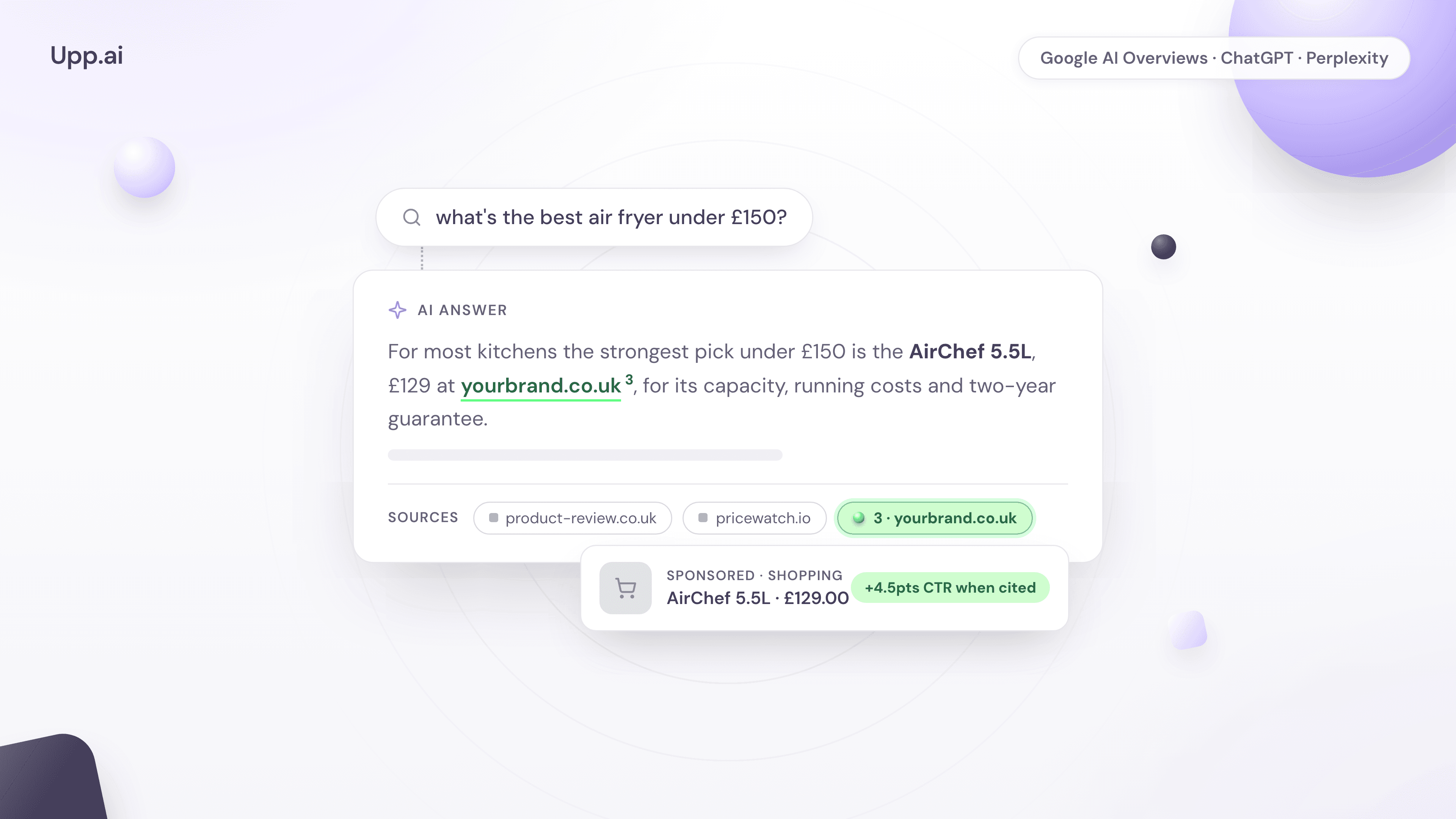
Answer engines don't click: what AEO and GEO mean for paid media
In two years, answer engine optimisation (AEO) and generative engine optimisation (GEO) have gone from SEO jargon to the fastest-rising discipline in search. The demand your campaigns bid on is increasingly read, and answered, by a model first. Here is what the answer layer means for paid media, and for the money behind it.
Upp.ai insights team
The State of PPC 2026: control is now the scarcest resource in paid media
Global ad spend crossed $1 trillion in 2025. The 1,306 professionals behind the industry's largest survey say the work has never been harder to control, or to prove. Here is what the data actually says, and what the strongest teams are doing about it.
Upp.ai insights team
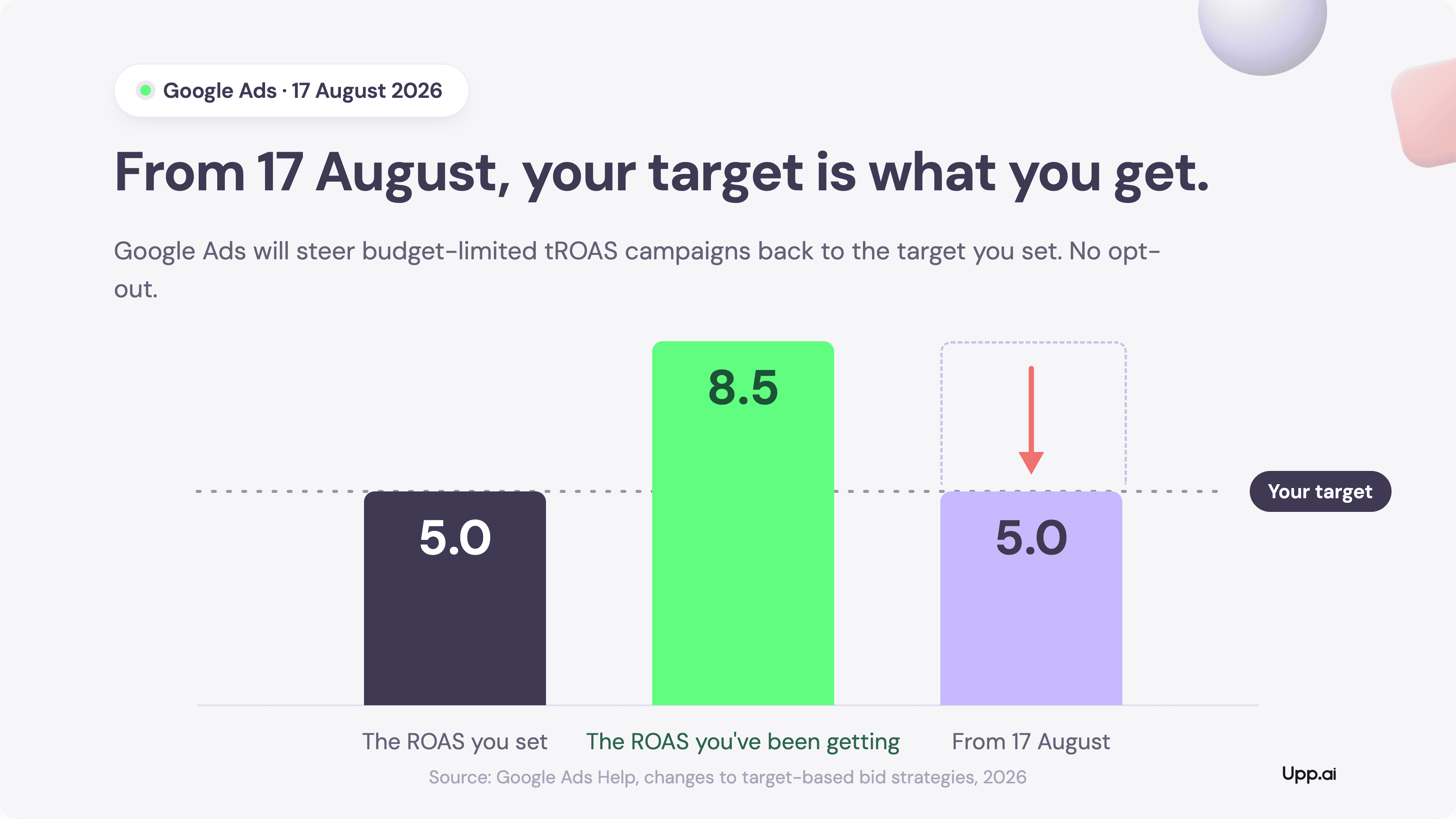
The 17 August bidding audit: is your outperformance strategy, or drift?
From 17 August, budget-limited campaigns on Target CPA and Target ROAS will deliver the number you typed, not the number you got used to. More configuration work has just landed on every media team. The winners will treat it as strategy.
Upp.ai insights team