The 17 August bidding audit: is your outperformance strategy, or drift?
From 17 August, budget-limited campaigns on Target CPA and Target ROAS will deliver the number you typed, not the number you got used to. More configuration work has just landed on every media team. The winners will treat it as strategy.
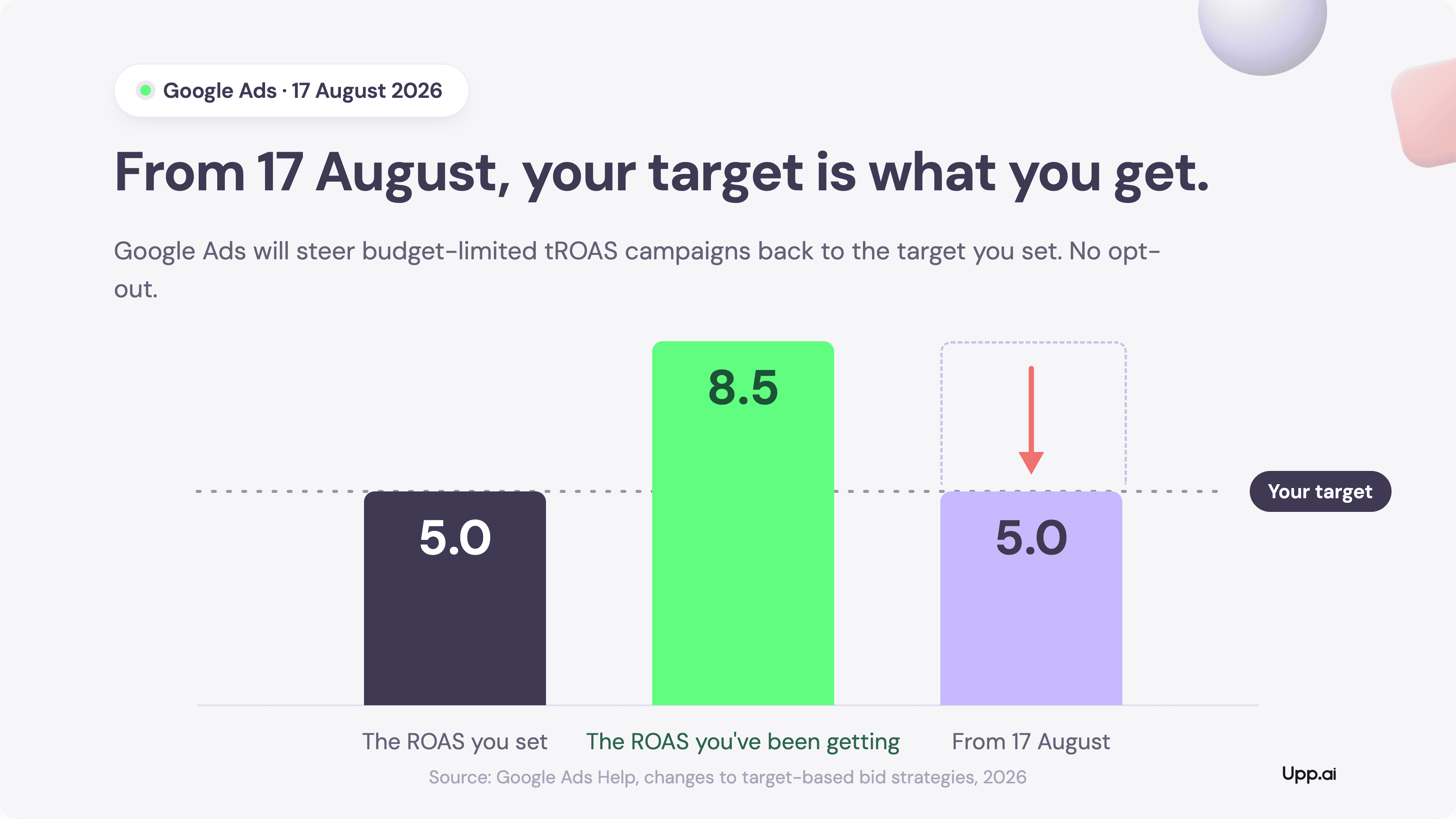
On 17 August, Google Ads starts taking your targets literally. Google's announcement is characteristically calm: campaigns that are limited by budget and run a target-based bid strategy, Target CPA or Target ROAS, will “more consistently perform toward your bid target”, including when budgets change. Consistent. Predictable. Both true.
What the calm phrasing understates: overperformance is ending. If your budget-limited campaign has a £10 tCPA and has been delivering £5, it will start delivering close to £10. The efficiency you have been banking as a quiet win becomes, on 17 August, a number you never asked for. Google's own worked example says exactly this.
The review tool has been live since 6 July. The change lands in five weeks. Be honest about what this is: another notification, another tool to learn, another pass through every campaign. More configuration work for teams already buried in it. The window is worth using anyway, because underneath the admin sits the question that decides whether your media makes money: when your campaigns beat their targets, was that strategy working, or targets drifting?
What is changing on 17 August?
One behaviour, precisely scoped. Today, a budget-limited campaign on a target-based strategy will often beat its target, and then wobble when you touch the budget. From 17 August, the same campaign will optimise toward the stated target and hold that efficiency as budgets move. Overachievement trends back to the number in the box. Scaling stops being a gamble.
That second half matters as much as the first. Under the old behaviour, raising the daily budget on an overperforming, budget-limited campaign usually meant fluctuations or outright decline while the system recalibrated. Under the new behaviour, spend scales at your stated target. Google is trading away your accidental upside and handing back something the trade has requested for years: predictability at the moment of scale.
One more consequence for retail teams: for multi-channel campaign types, Performance Max and Demand Gen, delivery may also redistribute across channels as the system re-optimises toward the stated target. If your PMax efficiency was quietly propped up by an over-delivering channel mix, expect that mix to move.
Google's worked example: the gap closes from Google's side
Who is affected, and how you will know
The trigger is specific: any account with a campaign that was limited by budget at any point in the last 12 months, running an impacted target-based strategy, gets an in-account notification pointing to the new Bid Target Adjustment Tool. If you run retail spend on tCPA or tROAS at any scale, assume that includes you. The 12-month lookback means campaigns you stopped thinking about are in scope too.
Google will not automatically adjust your bidding targets or budgets.
Read that sentence twice, because it is the unusual part. In the State of PPC 2026, 62% of practitioners said the platforms have become a black box, less insight, less transparency, decisions made on their behalf. This change runs the other way. Google is not taking a decision away; it is handing one back, with five weeks' notice and a tool. The system will do exactly what your target tells it to. Which is only comforting if your targets say what you mean.
Strategy or drift: the audit
Here is the uncomfortable part. A campaign delivering £5 against a £10 target is only good news if someone chose that gap. In most accounts, nobody did. The target was set at launch, calibrated to a different quarter's margins, and never revisited, because the results kept coming in better than asked. Outperformance became the account's structural slack: absorbed into forecasts, reported as efficiency, owned by no one.
That slack is what disappears on 17 August. So the audit is not “which campaigns are overperforming”. It is three questions, per budget-limited campaign, in order:
- Is the gap deliberate? Pull the last 90 days of actual CPA or ROAS against the stated target. If nobody can say why the gap exists, it is drift.
- Does the target encode your economics, or your history? A defensible target derives from margin, product mix and demand, not from whatever number was in the box when the campaign launched.
- If actuals landed exactly on target tomorrow, would you accept that? If yes, you are done. If no, the target is wrong, and from 17 August, wrong targets get delivered.
Strategy survives this change untouched: a team that set a £10 target meaning £10 loses nothing and gains cleaner scaling. Drift gets invoiced. The difference between the two is not in the platform. It is in whether anyone in the team can defend each number, and that is worth knowing regardless of what Google ships. A target is not a setting. It is the return your business asks of its media, written down.
Five options before the deadline
Google's help centre lists them plainly. Note what all five have in common: they are configuration. The decision underneath them is strategy, the return you need your media to make. The help centre cannot tell you which option each campaign deserves, because that depends on the audit above. The honest trade-offs:
1. Keep the target as it is
Right when the target already is the goal. Expect actuals to rise toward it if the campaign has been overachieving, and in exchange, budget increases now scale at that target instead of destabilising it. Doing nothing is a legitimate choice. Just make it a choice.
2. Match the target to recent performance
One click of “Apply” in the Bid Target Adjustment Tool locks today's efficiency in as the new target. Fast, and usually right for campaigns whose recent numbers reflect steady-state trading. The caution: the tool is quoting your history. If the last window includes a promo spike or a seasonal dip, you are about to make an exception your standard.
3. Set a custom target from your economics
The strategist's option. Derive the number from margin, stock position and where demand is heading, then enter it deliberately, £7 if £7 is what the unit economics support. From 17 August the system will hold you to it, which is exactly what a well-chosen target is for.
4. Switch to Maximise Conversions or Conversion Value
Keeps volume by spending the full budget without a target, which means CPA and ROAS float as budgets move. Reasonable where volume genuinely outranks efficiency; a quiet abdication everywhere else. You are not removing the target decision, you are handing it to the budget line.
5. Raise the budget
The quiet headline of the whole change. Once campaigns hold their targets through budget moves, the old fear of scaling a budget-limited winner loses its basis. Keep daily budgets comfortably above average daily spend, apply the forecasted recommendations where they clear your target, and judge results over one to two full conversion cycles, not the first nervous week.
More configuration, or more return?
Step back from the deadline and count the work. A notification in every affected account. A new tool to learn. A pass through every budget-limited campaign, target by target, then one to two conversion cycles of watching before you trust the result. Multiply by the next platform change, and the one after that. This is how media teams end up busy: not with strategy, with configuration.
None of that work makes your media more profitable by itself. What makes media profitable is the layer above it: knowing the return your business actually needs, per category, per margin, per moment of demand, and holding every pound of spend to it. The 17 August change carries exactly one strategic insight: the platforms will now do precisely what you tell them. So the value of a media team is no longer in operating the machine. It is in knowing what to tell it, so you can maximise the return that works for your business, not the one the account drifted into.
That is the divide the strongest retail teams have already crossed: keep the strategy, delegate the configuration.
Frequently asked questions
What is changing in Google Ads on 17 August 2026?
Budget-limited campaigns using target-based bid strategies such as Target CPA and Target ROAS will start delivering closer to the target you set, even when you adjust budgets. Campaigns that historically overachieved their targets will see performance trend back toward the stated target unless the target is updated.
Will Google change my tCPA or tROAS targets automatically?
No. Google has confirmed it will not automatically adjust bidding targets or budgets. Affected advertisers receive an in-account notification pointing to the Bid Target Adjustment Tool, live since 6 July 2026, where targets can be reviewed and updated. Doing nothing is itself a decision: performance will revert toward the target you have set.
Which campaign types are affected?
Search, Shopping, Performance Max, Demand Gen and Travel campaigns get the new behaviour on 17 August 2026. Display and Hotel campaigns already use it. App campaigns, Video reach and Video view campaigns keep the previous bidding behaviour. The change applies across Google Ads, Search Ads 360, Display & Video 360, Ads Editor and the API.
What is the Bid Target Adjustment Tool?
A tool in Google Ads, available since 6 July 2026, that shows historical performance for budget-limited campaigns on target-based strategies and lets you apply a new target in a couple of clicks: either matching recent actual performance or a custom number aligned to your unit economics.
My campaigns beat their targets today. What should I do before 17 August?
Pull the last 90 days of actual CPA or ROAS against the stated target for every budget-limited campaign. Where the gap is worth keeping, update the target to the number you actually want, derived from margin and demand rather than history. Where the target already reflects your goal, no action is needed, and you can scale budgets with more predictable efficiency after the change.
Sources: Changes to target-based bid strategies and the accompanying FAQ, Google Ads Help, 2026. Dates, the worked example, eligibility and platform availability are drawn from those pages. The 62% black-box figure is from The State of PPC Global Report 2026, ppcsurvey.com, covered in our analysis.
Move your paid media to AI
A free audit shows which of your targets are strategy, which are drift, and what delegating the configuration is worth this year.
Keep reading
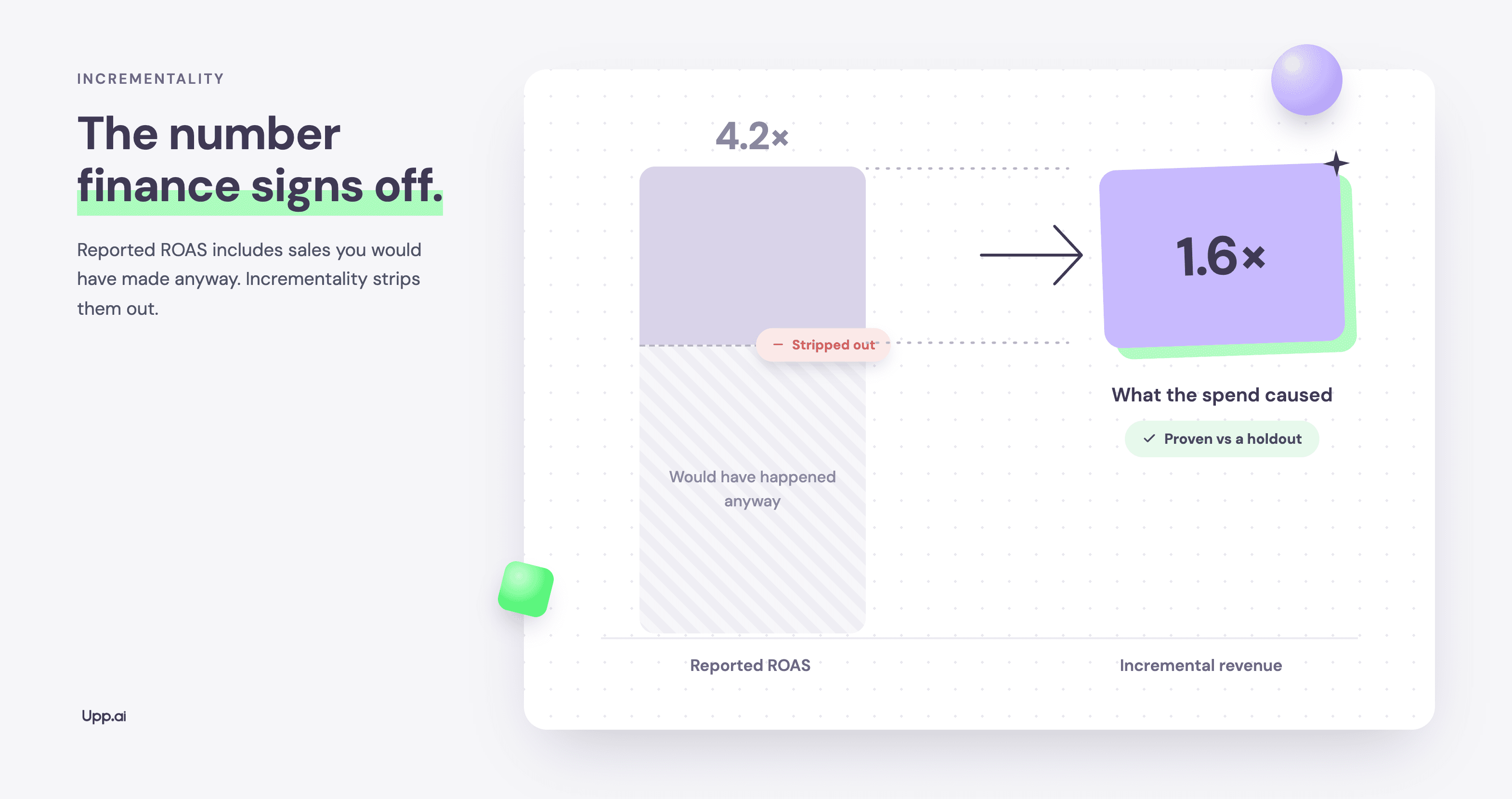
Why incrementality has replaced ROAS as the measure that matters
Finance is now asking a different question, and incrementality is the only lens that answers it.
Upp.ai insights team
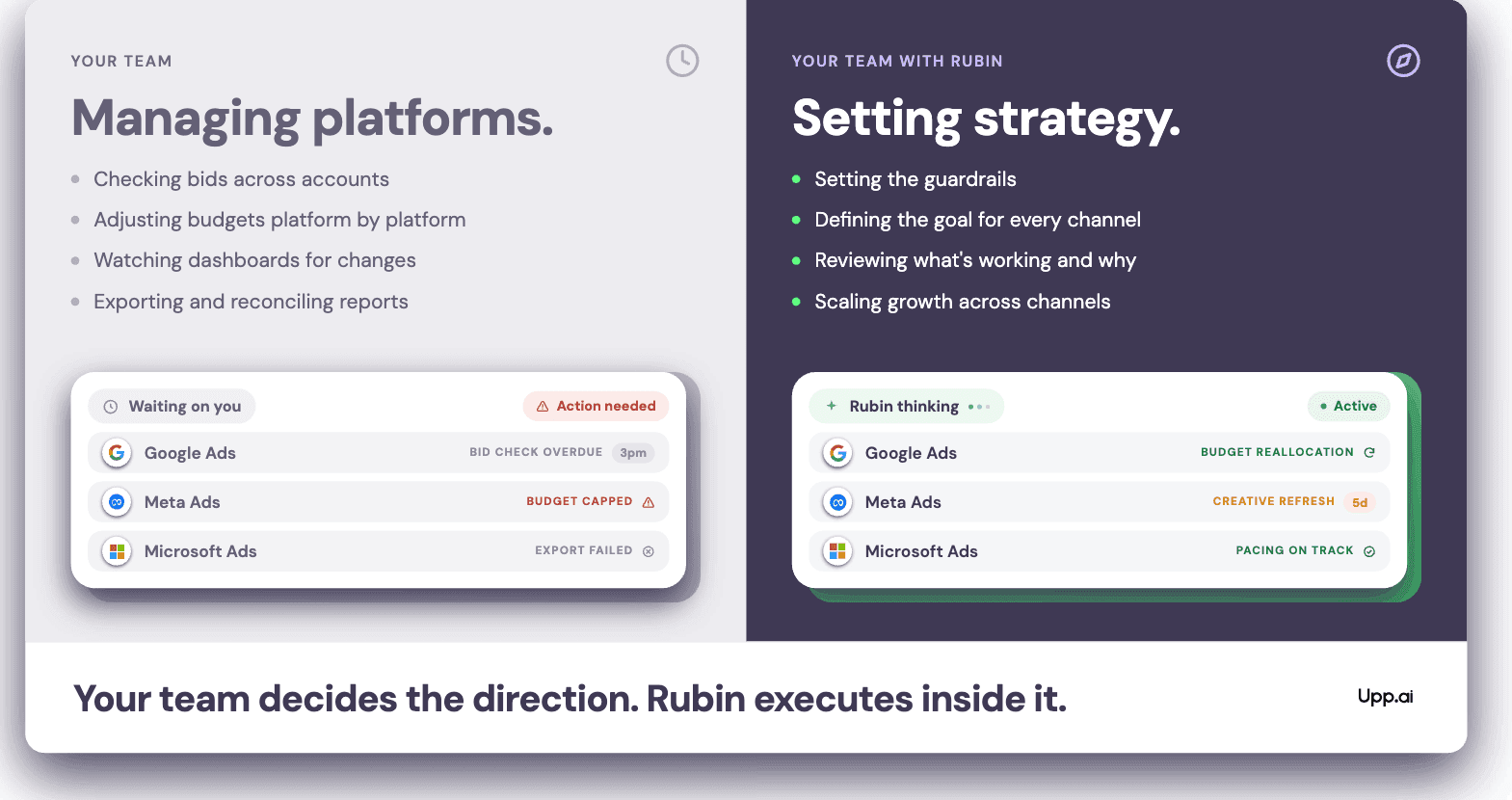
What is Microsoft PMax, and how is it different from Google's?
The same automation concept as Google's, with different inventory, less signal and its own pacing. Where the two differ and why they should be managed separately.
Upp.ai insights team
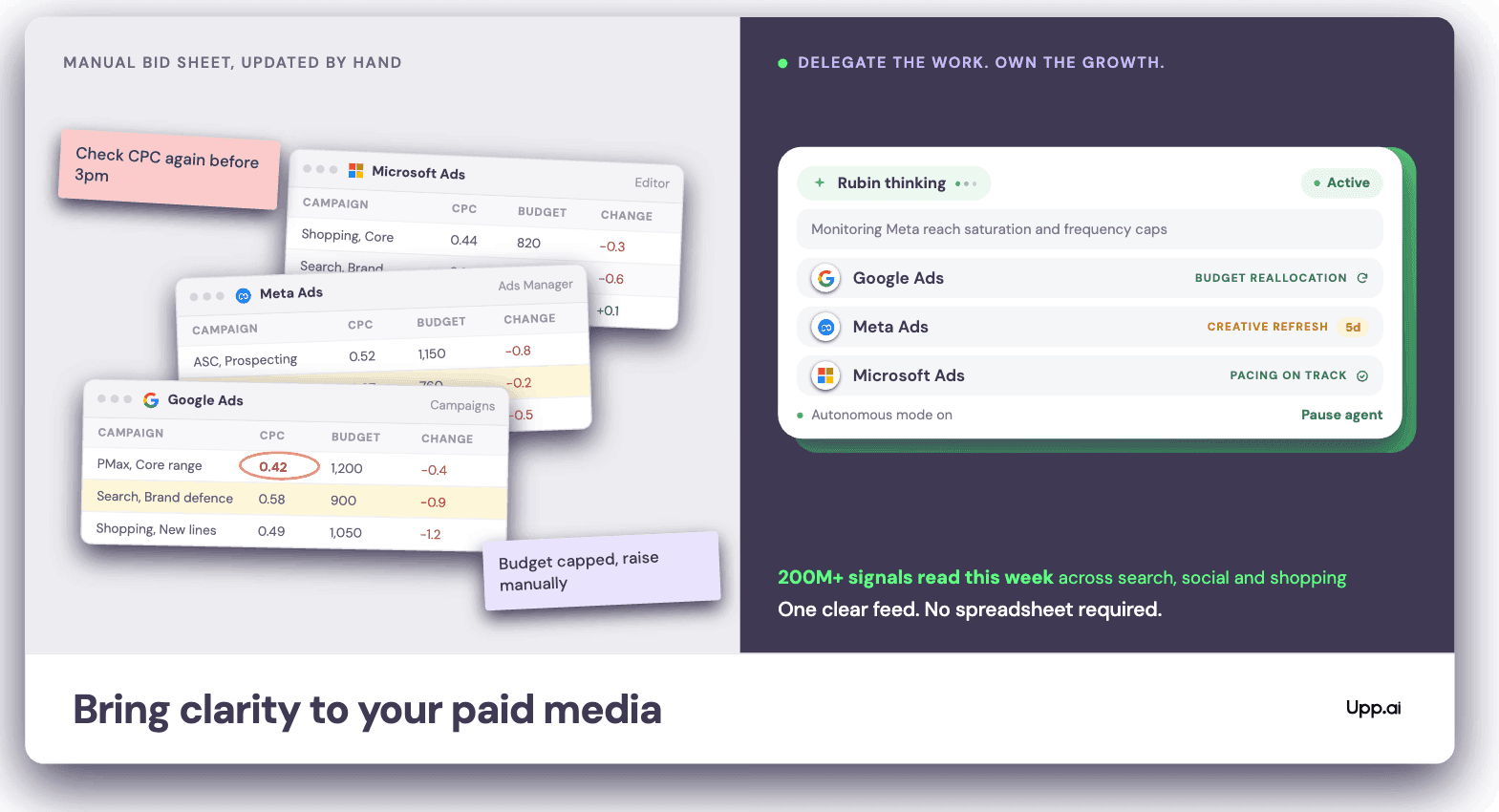
Why the paid media market moves faster than teams can react
53% of PPC professionals say the job is harder than it was two years ago. The reason is not a skills gap: purchase intent now forms across more surfaces than any team can watch.
Upp.ai insights team