Answer engines don't click: what AEO and GEO mean for paid media
In two years, answer engine optimisation (AEO) and generative engine optimisation (GEO) have gone from SEO jargon to the fastest-rising discipline in search. The demand your campaigns bid on is increasingly read, and answered, by a model first. Here is what the answer layer means for paid media, and for the money behind it.
What are AEO and GEO?
Answer engine optimisation (AEO). Structuring content so answer engines can extract and quote it: definitions first, questions as headings, clean FAQ markup. AEO optimises for being the answer.
Generative engine optimisation (GEO). The broader discipline of earning visibility in generated answers: citations, mentions and recommendations across ChatGPT, AI Overviews and Perplexity. GEO optimises for being the source.
The relationship to the discipline you already fund is simple. SEO earns the click. AEO earns the quote. GEO earns the recommendation. All three now shape the same buying journey, because a growing share of that journey runs through an answer rather than a results page.
The vocabulary is new but the shift is measured. US searches for "answer engine optimization" have grown from 50 to 3,600 a month in two years; "generative engine optimization" from 170 to 8,100 over the same period, inside an AI-search-optimisation space now worth around 20,000 searches a month. The trade renamed itself before most media plans noticed.
One finding matters more than the acronyms. Generative engines lean heavily on earned media: by one MuckRack analysis, up to 89% of AI citations point to third-party coverage rather than brand-owned pages. Who the answer layer trusts is not fully in your hands, which is precisely why it needs managing.
The demand didn't disappear. It moved
Search is not shrinking. Google still handles around 417 billion searches a month, and ChatGPT alone processes roughly 72 billion messages over the same period. What has changed is where the journey ends: more of those moments finish in an answer, not a click. Zero-click behaviour, long a publisher's complaint, is now a budget holder's question.
Coverage is broad and concentrating where research happens. AI Overviews appear on roughly 36% of informational queries, against 8% of commercial and 5% of transactional ones; BrightEdge tracked them on nearly half of all queries by February 2026. The pattern is consistent: the higher up the funnel your buyer is, the more likely a model has already answered them.
The UK is not waiting its turn. AI Overviews have been live in British results since 2024, and the behavioural shift reads the same in UK accounts: fewer research clicks, the same purchase intent underneath. What lags is the vocabulary. Search demand for AEO and GEO is US-led, with UK volumes several multiples smaller and a step behind, the same pattern UK teams watched with incrementality and POAS before both went mainstream here. The lag is not a reason to wait. For a UK team, it is the window.
What AI answers are doing to paid media
AEO and GEO are SEO disciplines. The reason a paid media team should care is what the answer layer does to the auction underneath it.
The relationship runs in both directions. Downstream, the answer layer filters which queries survive to a results page at all, so it shapes the demand your auctions ever see. Upstream, the auctions are following the answers: Google now places Search and Shopping ads in and around AI Overviews and is extending advertising into AI Mode. Paid media does not sit beside the answer layer. It sits underneath it.
The first phase was compression. On the informational queries most exposed to AI Overviews, Seer Interactive measured paid CTR falling from 19.70% to 6.34% between June 2024 and September 2025. The second phase is redistribution: across a 5.47 million query panel, paid CTR on Overview-present queries recovered from 14.64% to 16.21% by February 2026, while paid CTR on queries without an Overview drifted from 25.98% down to 21.85%. The compression happened, then it stopped. What remains is a different results page.
Whatever AI Overviews are doing to organic results, they are not doing the same thing to paid ads.
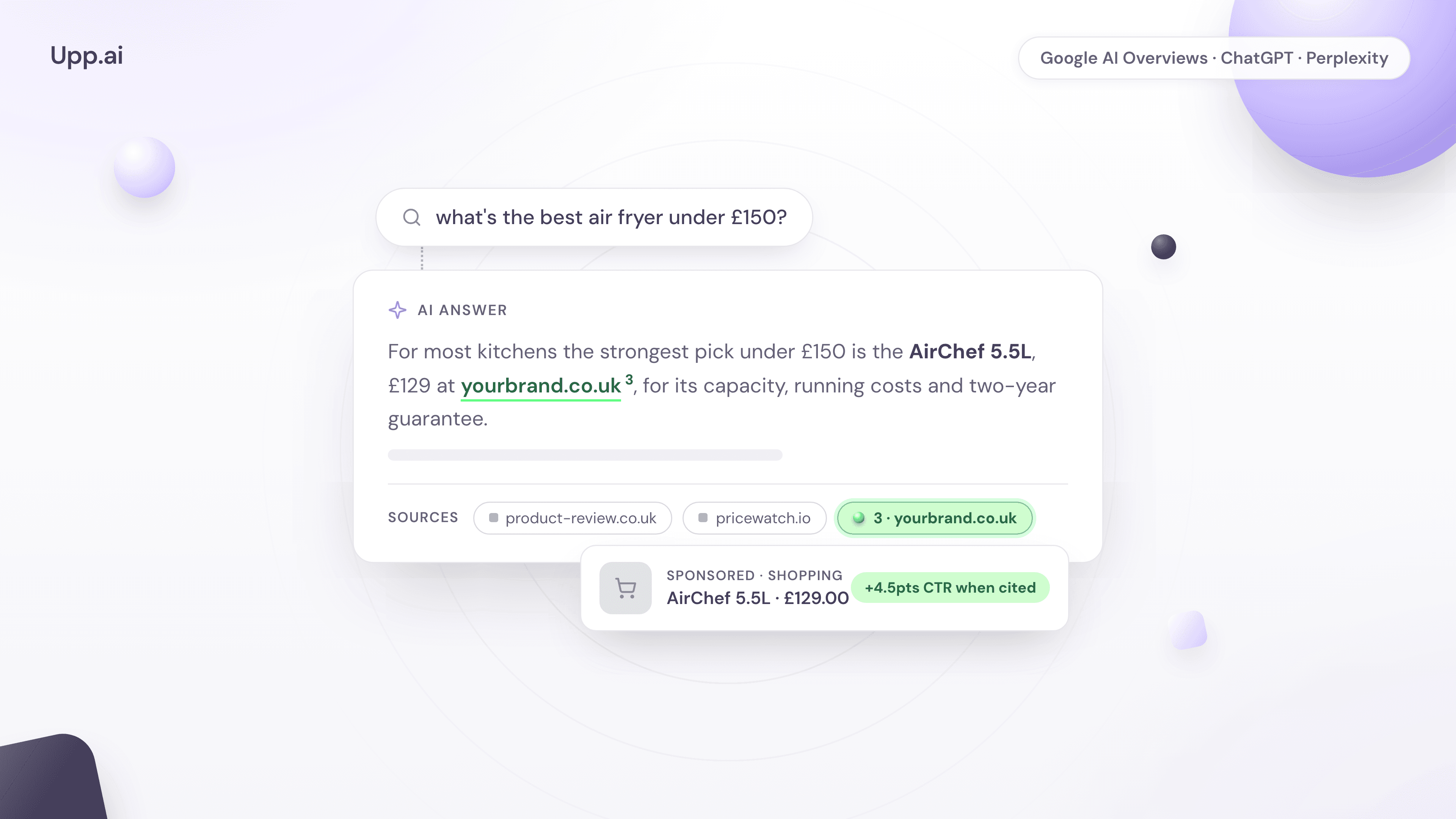
Inside that redistribution sits the number worth reading twice. On the same informational query, with the same Overview present, brands cited inside the answer earned 15.74% paid CTR across 2025; brands not cited earned 11.19%. The gap held every single month. Organic shows it twice over: 2.07% for cited brands against 0.94% uncited. Citation status has become a performance variable your bid cannot see.
The funnel maths changes with it. Impressions grow while clicks stay flat, so CTR falls without a bidding mistake or a creative failure; the clicks that remain are fewer and better qualified, because the answer did the early filtering. Judge the change in your account by intent segment, not by the blended average, or you will fix things that are not broken.
Retail: shoppers ask, engines answer
For UK retail teams the shift is concrete, because product discovery is exactly the kind of question answer engines like. "What's the best air fryer under £150" no longer returns ten blue links and a shelf of ads; it returns a short list, with reasons, assembled from whatever sources the model trusts. Merchants have noticed: "Shopify AEO best practices" is already a measurable search category of its own.
So the question for a retail paid-media team is not whether to learn an SEO discipline. It is narrower: when a shopper asks an engine what to buy, is your product in the candidate set? Feed quality, price accuracy, availability and quotable product pages now shape the demand that arrives at your campaigns, before a single bid is placed. For a UK retailer, the feed you maintain for Shopping is also the catalogue the answer layer reads.
And the intent forming inside those conversations is readable. It surfaces in LLM traffic before it surfaces in keyword planners, which is why demand signals across search, social and LLMs, read continuously, have become the planning input that matters. Waiting for the search-volume report is reading last month's demand.
What your team should do now
Four moves, in order of effort. All four are measurement and structure, none is panic spend.
1. Segment your account by answer exposure
Split reporting by Overview presence, so you know which spend competes with an answer and which does not. Track AI referral traffic separately; it is smaller, and it converts differently. A falling blended CTR tells you nothing a segmented one will not tell you better.
2. Make your best pages quotable
Apply the AEO method to the pages that earn your citations: the answer first, question-shaped headings, one clean definition per concept, FAQ markup underneath. If a model cannot extract your answer, it will quote someone else's, and the premium goes with it.
3. Treat citations as media, not SEO admin
Most AI citations are earned coverage, and citation status carries a measurable paid consequence: the 4.5-point premium above. Put citation share of voice next to impression share in the weekly report, and give digital PR a number it can be judged on.
4. Read demand where it forms
Keyword planners lag; purchase intent shows up in conversations first. Plan budgets against live demand across search, social and LLMs, then hold every pound of spend to the incremental return it actually causes. The answer layer changes where demand is read, not what your media is for.
Frequently asked questions
What is answer engine optimisation (AEO)?
AEO is the practice of structuring content so AI answer engines, such as Google AI Overviews, ChatGPT and Perplexity, can extract, quote and attribute it. In practice: lead with the answer, phrase headings as questions, keep one clean definition per concept and add FAQ markup.
What is the difference between AEO and SEO?
SEO optimises pages to rank and earn the click. AEO optimises the same content to be quoted inside the answer itself. They share foundations, crawlability, authority and structure; the difference is the outcome, a visit versus a citation. Strong pages now do both.
What is generative engine optimisation (GEO)?
GEO is the broader practice of earning brand visibility across generative engines: being cited, mentioned and recommended when models assemble answers. It spans content, digital PR and earned media, because generative engines weight trusted third-party sources heavily.
Do ads appear in AI Overviews and AI Mode?
Yes. Google shows Search and Shopping ads in and around AI Overviews and is extending advertising into AI Mode. Placement does not change the fundamentals: qualification is shifting from the click to the answer, and cited brands see stronger paid performance on the same page.
Is AI search changing paid media in the UK yet?
Yes. AI Overviews have been live in UK results since 2024, and UK accounts show the same pattern the US studies describe: compressed clicks on research queries, steadier high-intent and Shopping demand. UK search volumes for AEO and GEO run several multiples behind the US, which gives UK teams a window to build citation share before competitors price it in.
How do you get cited in AI Overviews or ChatGPT?
Publish answer-first content on pages engines can parse, earn third-party coverage, which drives the majority of citations, and keep facts consistent across your site, feeds and profiles. Rankings still matter: most Overview citations come from domains already ranking in the top ten.
Sources: Seer Interactive AI Overviews CTR studies, 2025 to 2026 (5.47M-query panel; citation-premium analysis). SEMrush search-demand data, July 2026. MuckRack AI citation research, 2025. BrightEdge and Conductor AI Overview coverage tracking, 2026. The State of PPC Global Report 2026, ppcsurvey.com, covered in our analysis. Figures are drawn from those studies; segment-level results vary by vertical and intent mix.
Move your paid media to AI
A free audit shows where demand is forming, which answers name your brand, and what delegating the configuration is worth this year.
Keep reading
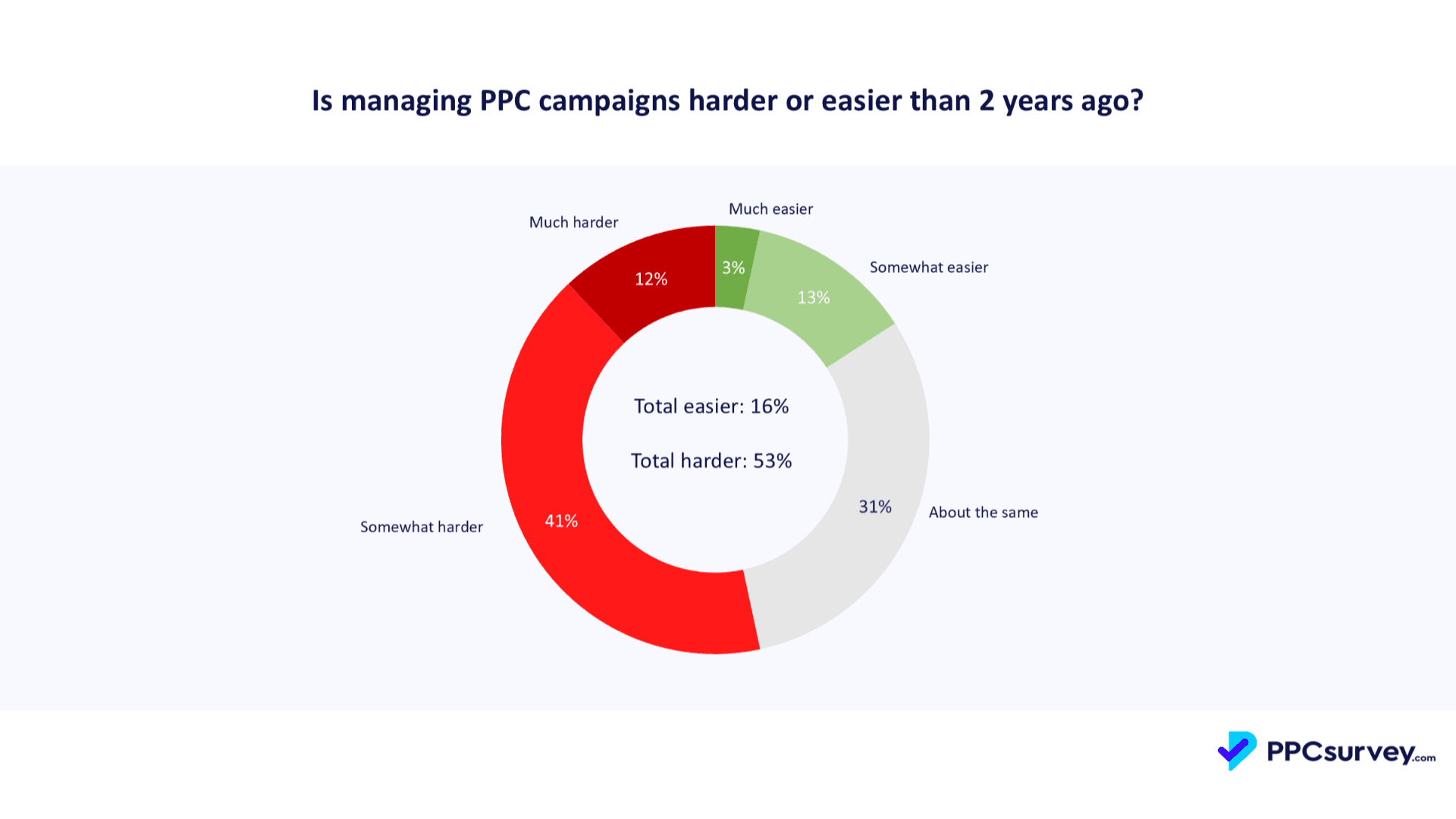
The State of PPC 2026: control is now the scarcest resource in paid media
Global ad spend crossed $1 trillion in 2025. The 1,306 professionals behind the industry's largest survey say the work has never been harder to control, or to prove. Here is what the data actually says, and what the strongest teams are doing about it.
Upp.ai insights team
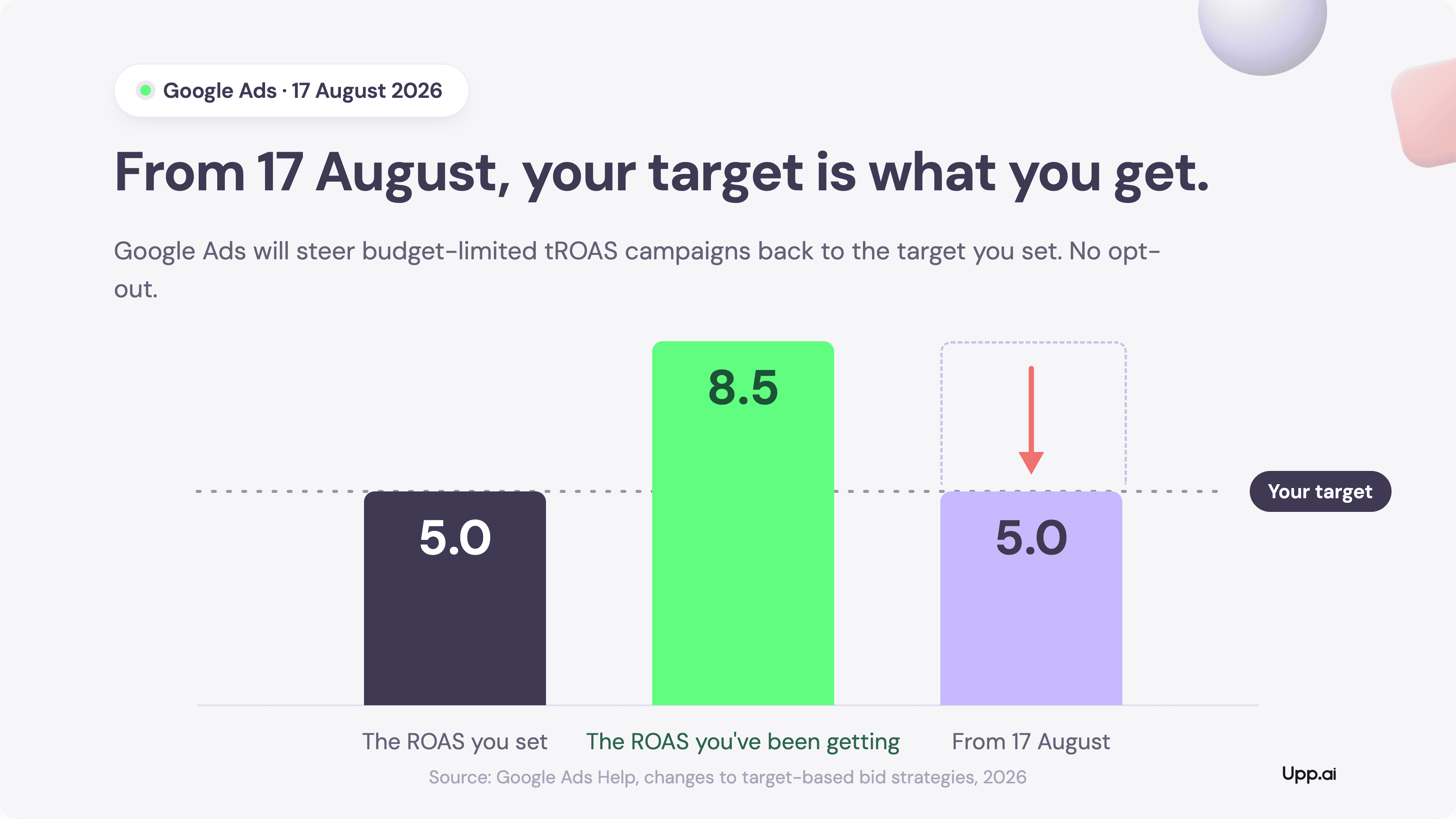
The 17 August bidding audit: is your outperformance strategy, or drift?
From 17 August, budget-limited campaigns on Target CPA and Target ROAS will deliver the number you typed, not the number you got used to. More configuration work has just landed on every media team. The winners will treat it as strategy.
Upp.ai insights team