The State of PPC 2026: control is now the scarcest resource in paid media
Global ad spend crossed $1 trillion in 2025. The 1,306 professionals behind the industry's largest survey say the work has never been harder to control, or to prove. Here is what the data actually says, and what the strongest teams are doing about it.
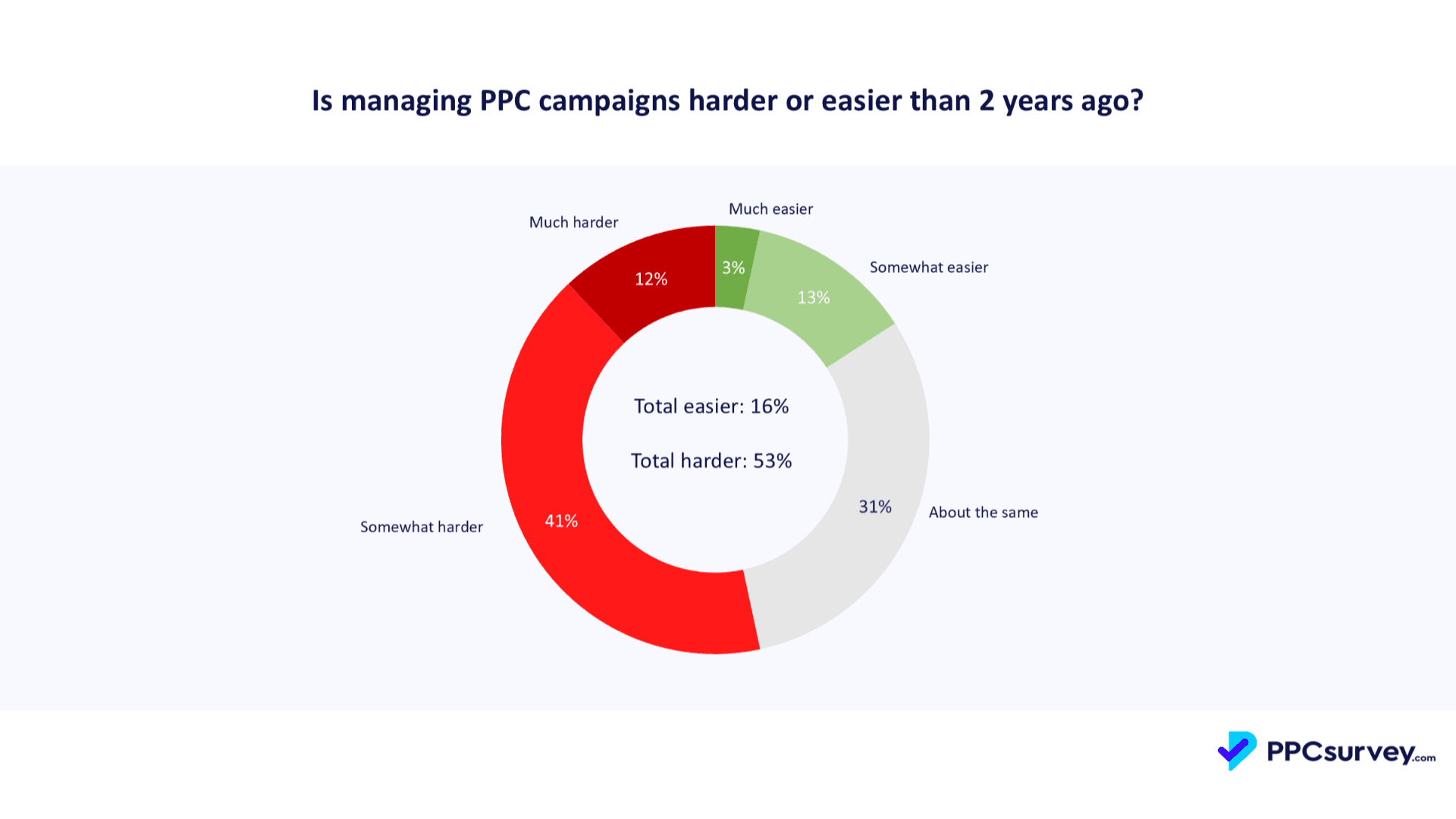
53% of PPC professionals say managing paid media is harder than two years ago. Chart: The State of PPC Global Report 2026, ppcsurvey.com.
Each year, PPCsurvey.com asks the people who run the world's paid media how the work is actually going. The 2026 edition is the largest yet: 1,306 PPC professionals across more than 50 countries, surveyed in November and December 2025, spanning agencies, in-house teams and freelancers. It is the closest thing the industry has to a census.
The findings land in a market that has just crossed $1 trillion in annual ad spend for the first time. More money is moving through paid channels than ever. And the people moving it report less control, less visibility and less confidence in measurement than at any point in the survey's history.
Three numbers tell the story.
Why is paid media harder in 2026?
Because control moved. 53% of PPC professionals say managing paid media is harder than it was two years ago, up from 49% when the survey last asked in 2024. The increase holds across agencies, in-house teams and freelancers, which rules out the comfortable explanation. This is not a skills gap. It is a structural shift in the platforms themselves.
The sharpest numbers in the report are about control. Asked why the job is harder, 62% point to less insight and transparency from the ad platforms, the black box problem. 53% cite less accurate conversion measurement, 45% higher CPCs in a more crowded auction, and 43% less control over targeting and creatives. Smart Bidding sets the bids. Performance Max picks the placements and keeps the query-level detail to itself. Broad match decides what a keyword means this week. The interfaces have been simplified. The job has not.
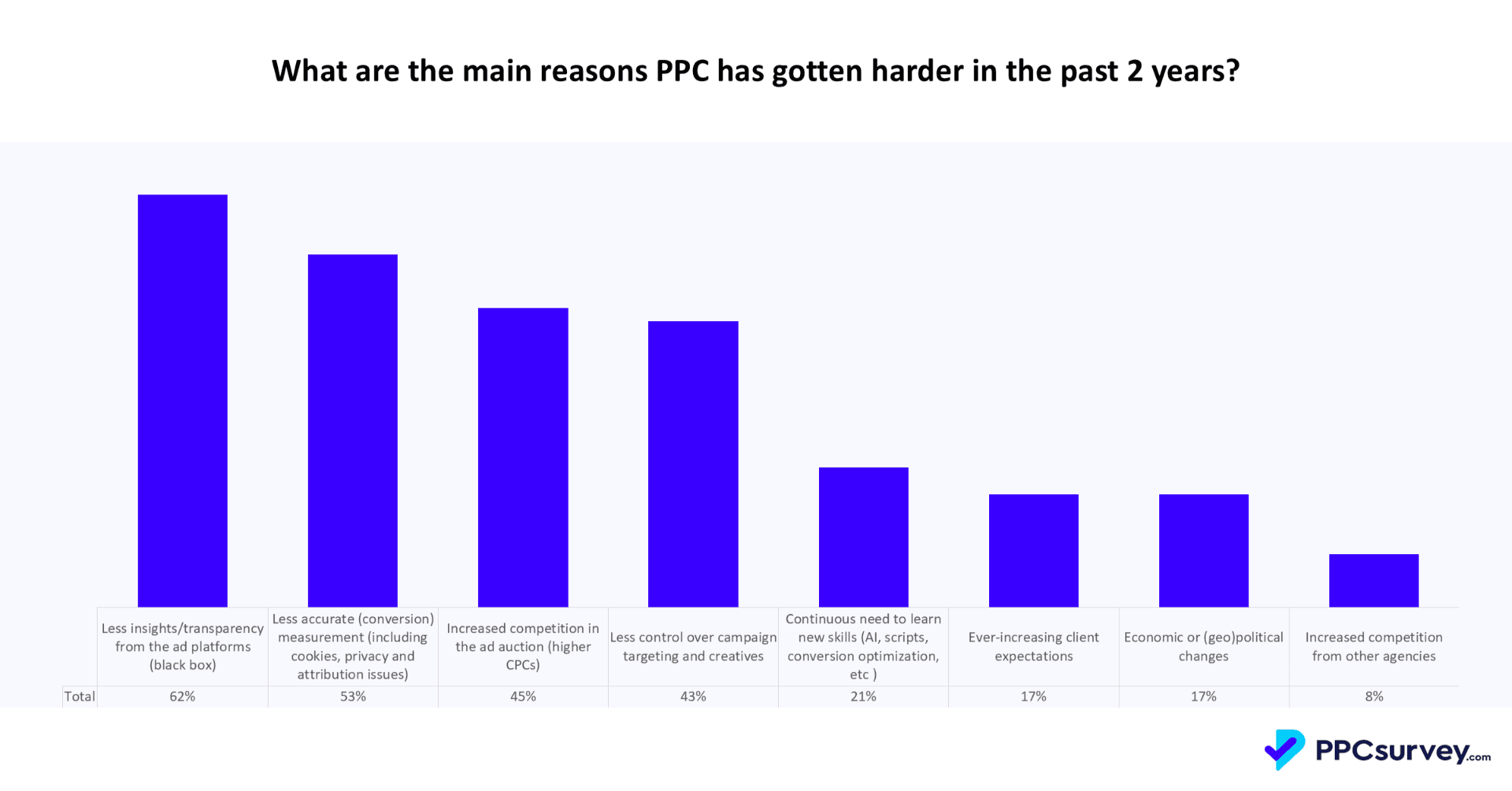
Perhaps 'harder' isn't about more buttons… it's about fewer.
Two years of the same answer makes a trend. The complexity did not disappear when the platforms automated the levers. It moved into tracking, creative production and measurement, the places automation cannot reach, and it took the visibility with it.
What happened to AI as a priority?
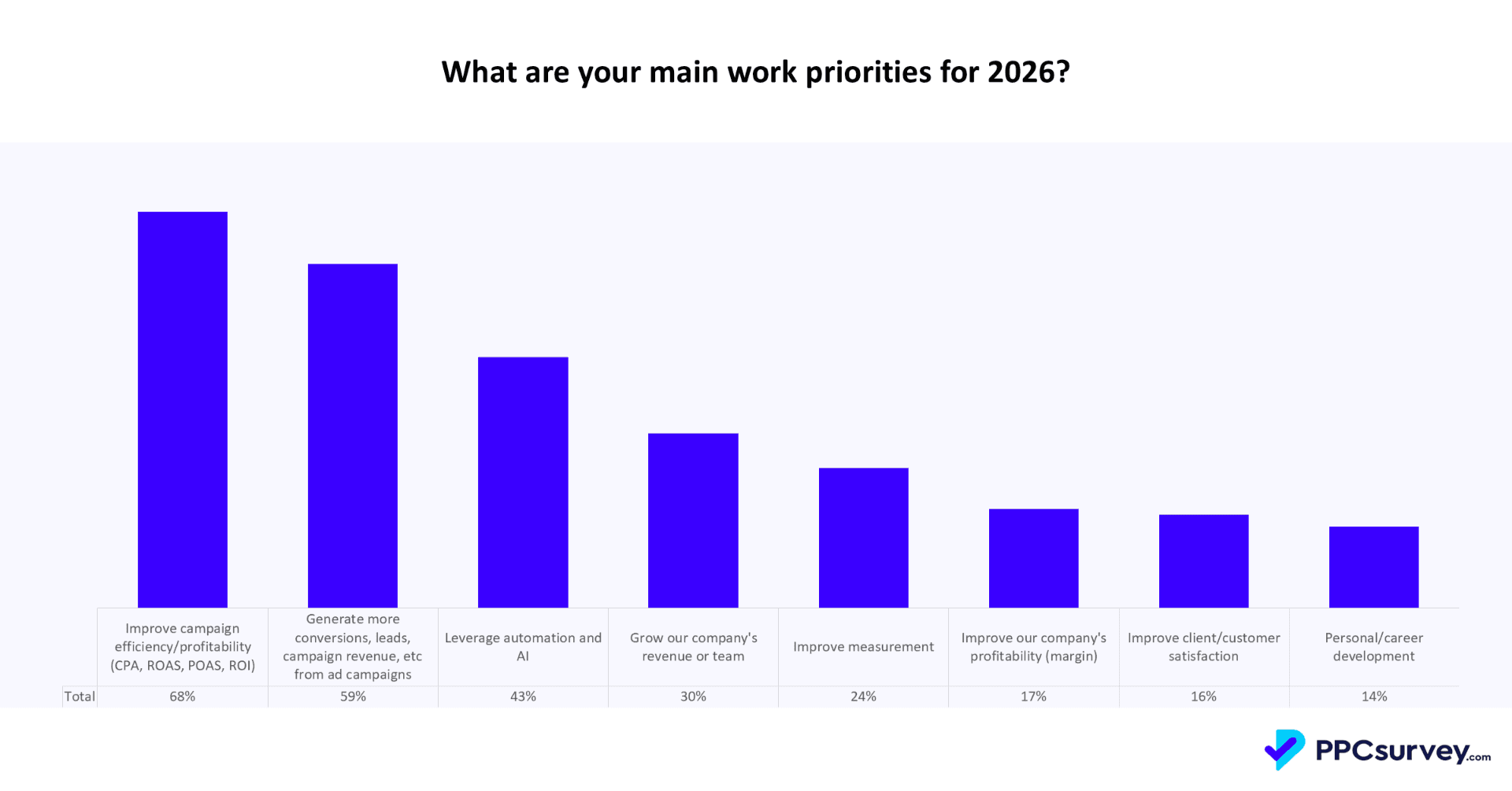
It grew up. In the 2024 edition, AI and automation was the profession's number one work priority. In 2026 it has fallen to third, at 43%, behind improving campaign efficiency and profitability (68%) and generating more conversions and leads (59%).
That fall is not a retreat. Adoption is broad and daily: 56% of practitioners use ChatGPT, ahead of Gemini at 17% and Claude at 13%. AI simply stopped being a strategy and became a tool. Nobody lists spreadsheets as a work priority either.
The more honest number is the time saved: around five hours per week, on average. Five hours is a good assistant. It is not a new operating model. Most teams have AI that drafts, summarises and suggests, stacked on top of a workflow that still expects humans to do the configuration work by hand. The efficiency the industry actually wants, the 68%, does not come from writing ads faster. It comes from changing who, or what, carries the execution load.
The measurement gap nobody has closed
55% of PPC professionals struggle to measure true incrementality: the sales lift their media actually caused, not the conversions a platform claimed. Put that next to the 62% who say the platforms have become a black box and the shape of the problem is clear. The systems spending the budget are increasingly the same systems grading the results.
Privacy changes and signal loss have made attribution murkier at exactly the moment platform reporting fills the gap with its own numbers. Attribution answers what happened alongside the spend. Incrementality answers what happened because of it. Holdout tests, geo experiments and independent measurement environments are moving from nice-to-have to table stakes, because platform-graded homework no longer survives a CFO conversation.
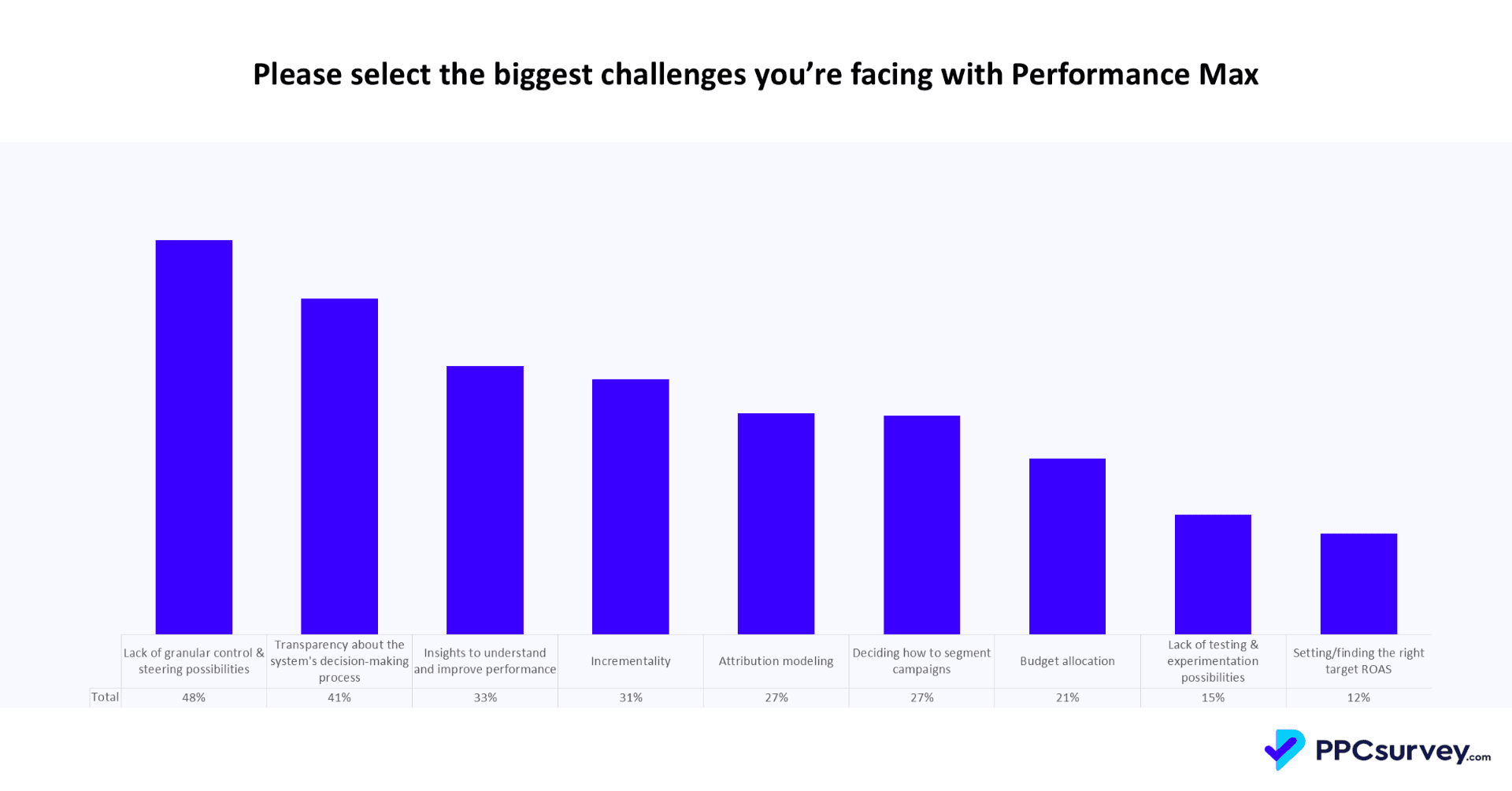
The upside is measured too. Teams that unify their first-party data see roughly twice the incremental revenue, according to BCG and Think with Google. Proof is not just defence. It is a growth lever.
What the strongest teams do differently
Read as a whole, the report describes a profession mid-shift: from operators to strategists. The pressure is not abstract. Asked what happens to their PPC management in the next one to two years, one in five advertisers says they plan to shift repetitive agency work to automation, AI or software.
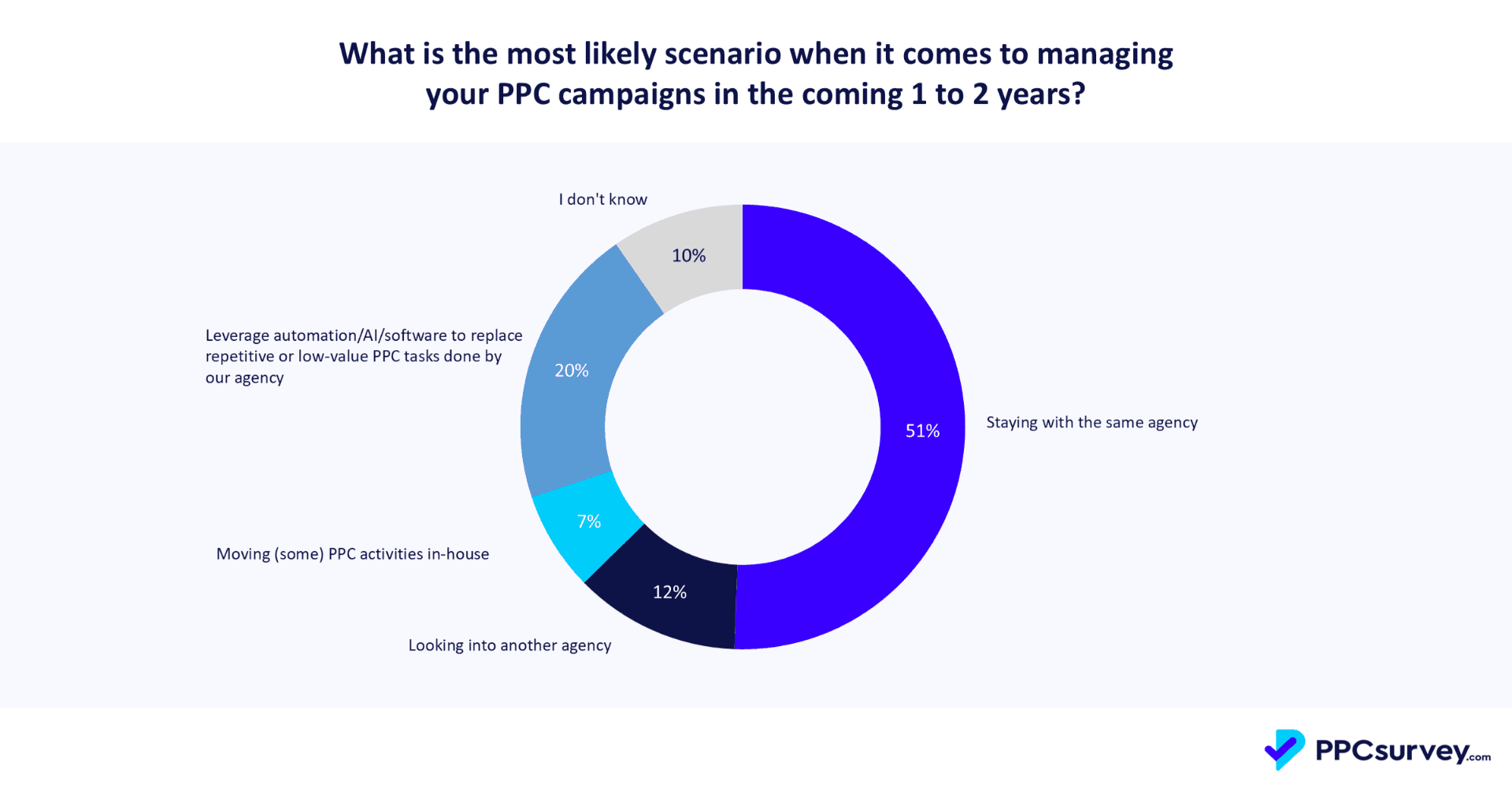
The practitioners reporting the most stability are not fighting the automation, and they are not surrendering to it. They changed the shape of the job. Three moves recur.
1. They read demand, not dashboards
Purchase intent now moves across search, social and, increasingly, LLMs before it appears in any platform report. Teams that plan against live demand signals act ahead of the shift instead of reconciling it a month later.
2. They prove lift independently
Incrementality measured in an environment the platform does not control, with holdouts, causal methods and clean baselines, so every pound of spend can defend itself.
3. They delegate configuration, and keep control
Execution runs inside guardrails the team sets: targets, budgets and boundaries. The team directs. The system executes. That is where the five hours a week stop being the ceiling.
Frequently asked questions
What is the State of PPC report?
An annual industry survey published by PPCsurvey.com with TrueClicks and nine industry partners. The 2026 edition surveyed 1,306 PPC professionals across more than 50 countries in November and December 2025, making it the largest survey of the profession. The full 72-page report is free, no email required.
Is PPC getting harder in 2026?
Yes. 53% of professionals say managing paid media is harder than two years ago, up from 49% in 2024. The rise holds across agencies, in-house teams and freelancers, and is driven by less transparency from the ad platforms, rising competition and measurement complexity rather than a skills gap.
How much time do AI tools actually save PPC teams?
Around five hours per practitioner per week, on average. Useful, but far short of a transformation, which is why AI fell from the number one work priority in 2024 to third in 2026.
What replaced AI as the top PPC priority for 2026?
Improving campaign efficiency and profitability, named by 68% of respondents, followed by generating more conversions and leads at 59%. AI and automation sits third at 43%, after ranking first in 2024.
What is incrementality and why does it matter in PPC?
Incrementality is the sales lift actually caused by media, versus what would have happened anyway. 55% of professionals struggle to measure it. Independent methods such as holdout tests, geo experiments and causal models separate real lift from claimed conversions, and teams that unify first-party data report roughly twice the incremental revenue.
Sources and methodology: The State of PPC Global Report 2026, published by PPCsurvey.com with TrueClicks and nine industry partners. 1,306 respondents, 50+ countries, fielded November to December 2025. Difficulty, priority, transparency and AI-usage figures are drawn from the report; the first-party data figure is from BCG and Think with Google. The report's charts are free to reuse with a link to ppcsurvey.com.
Move your paid media to AI
See how Upp.ai helps your team run paid media with AI, so you can focus on strategy.
Keep reading
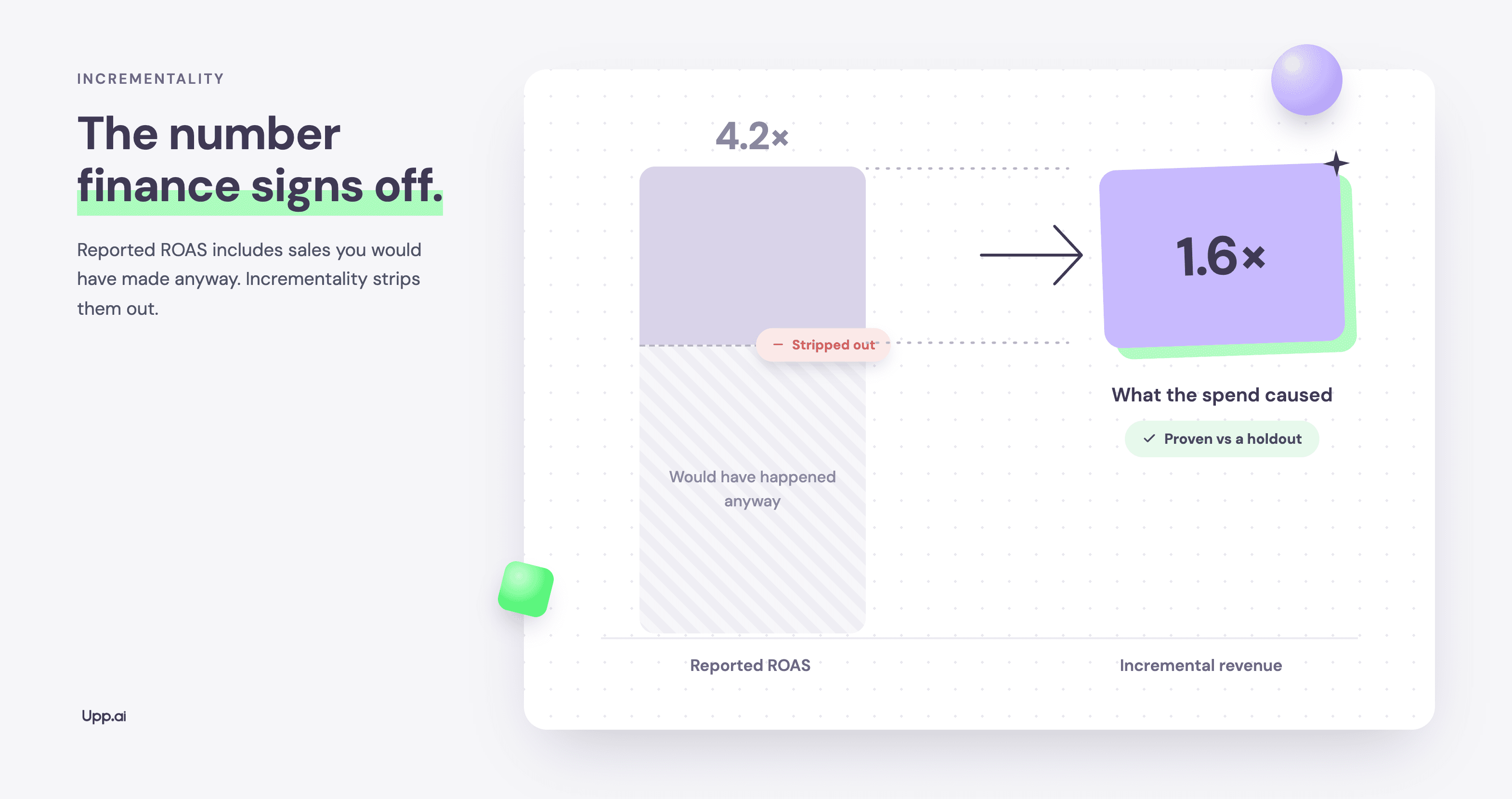
Why incrementality has replaced ROAS as the measure that matters
Finance is now asking a different question, and incrementality is the only lens that answers it.
Upp.ai insights team
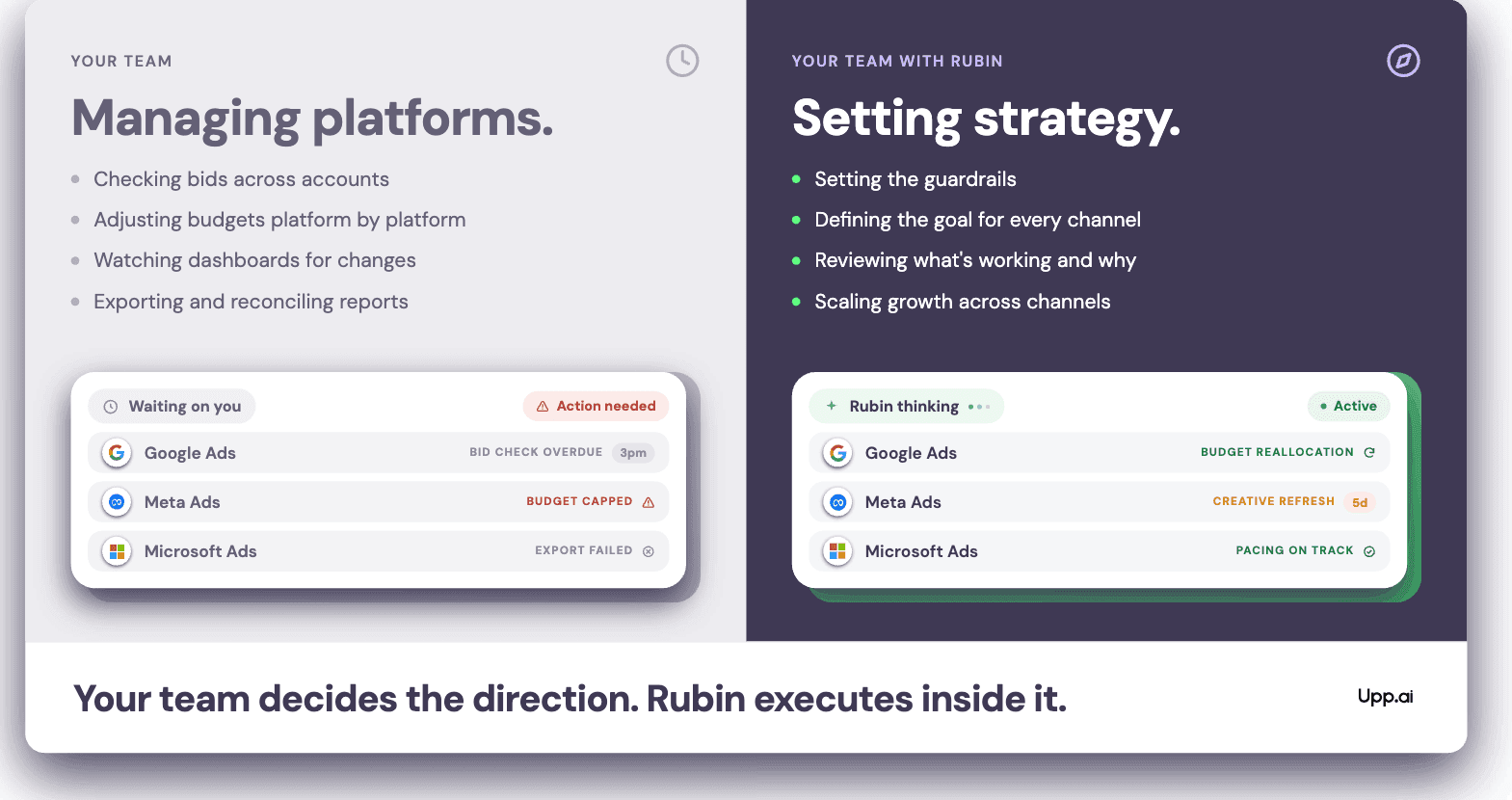
What is Microsoft PMax, and how is it different from Google's?
The same automation concept as Google's, with different inventory, less signal and its own pacing. Where the two differ and why they should be managed separately.
Upp.ai insights team
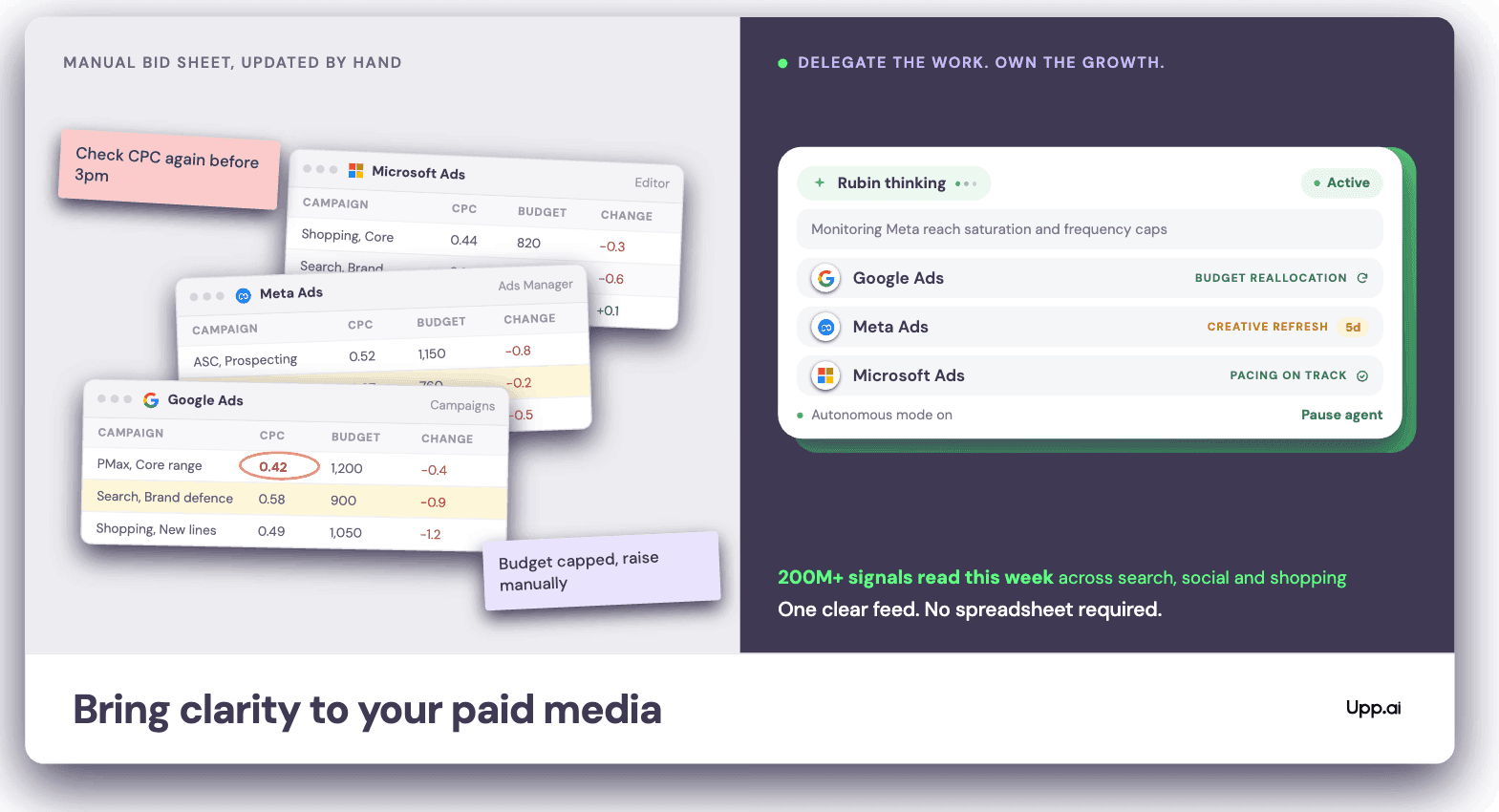
Why the paid media market moves faster than teams can react
53% of PPC professionals say the job is harder than it was two years ago. The reason is not a skills gap: purchase intent now forms across more surfaces than any team can watch.
Upp.ai insights team