PPC reporting in 2026: what metrics actually matter after the AI Max migration
September's AI Max migration quietly rewired how Search campaigns match and report. The metrics worth presenting now, the ones to retire from the board pack, and how to reconcile the change.
October is reconciliation month for UK paid search teams. September's reports are the first full month after Google's AI Max auto-upgrade, and in account after account the same conversation is happening: spend is up or down a few points, the query mix looks different, and somebody senior wants to know whether the campaigns changed or the market did.
The honest answer is that the campaigns changed. During September, Google automatically upgraded Search campaigns using campaign-level broad match and automatically created assets to AI Max — we covered the mechanics in our AI Max auto-upgrade explainer before it landed. Matching now extends beyond your keywords to your landing pages and assets, text can be customised at serve time, and the reporting surface changed shape to match.
That makes this a reporting problem twice over. First, a reconciliation job: explaining September cleanly. Second, a design job: deciding what a weekly and monthly PPC report should even contain in 2026, now that the inputs you used to report on — keywords you chose, ads you wrote — control a shrinking share of the spend.
What September's migration changed in your reports
AI Max bundles three behaviours: search term matching that extends beyond your keyword list, text customisation that can rewrite creative at serve time, and final URL expansion that can choose a different landing page. Each one moves something your reports used to treat as fixed.
The reporting surface changed with it. Three places to look first:
- Keyword report: two new aggregate rows — “Total: AI Max expanded matches” for traffic from broad-match expansion of your keywords, and “Total: AI Max landing page matches” for queries matched from your landing pages and assets with no keyword involved.
- Search terms report: match source columns now distinguish how each query reached you, which is the raw material for negative keywords and URL exclusions.
- Search terms and ad combinations: a new report Google began rolling out in October that joins queries, the creative served and the landing page chosen — the first single view of what AI Max actually assembled.
Google's own AI Max reporting documentation recommends waiting at least two weeks after a campaign gains AI Max before reacting to its numbers. For reconciliation purposes that cuts the other way too: September contains a learning period, so don't extrapolate the month as the new normal.
The metrics to retire from the board pack
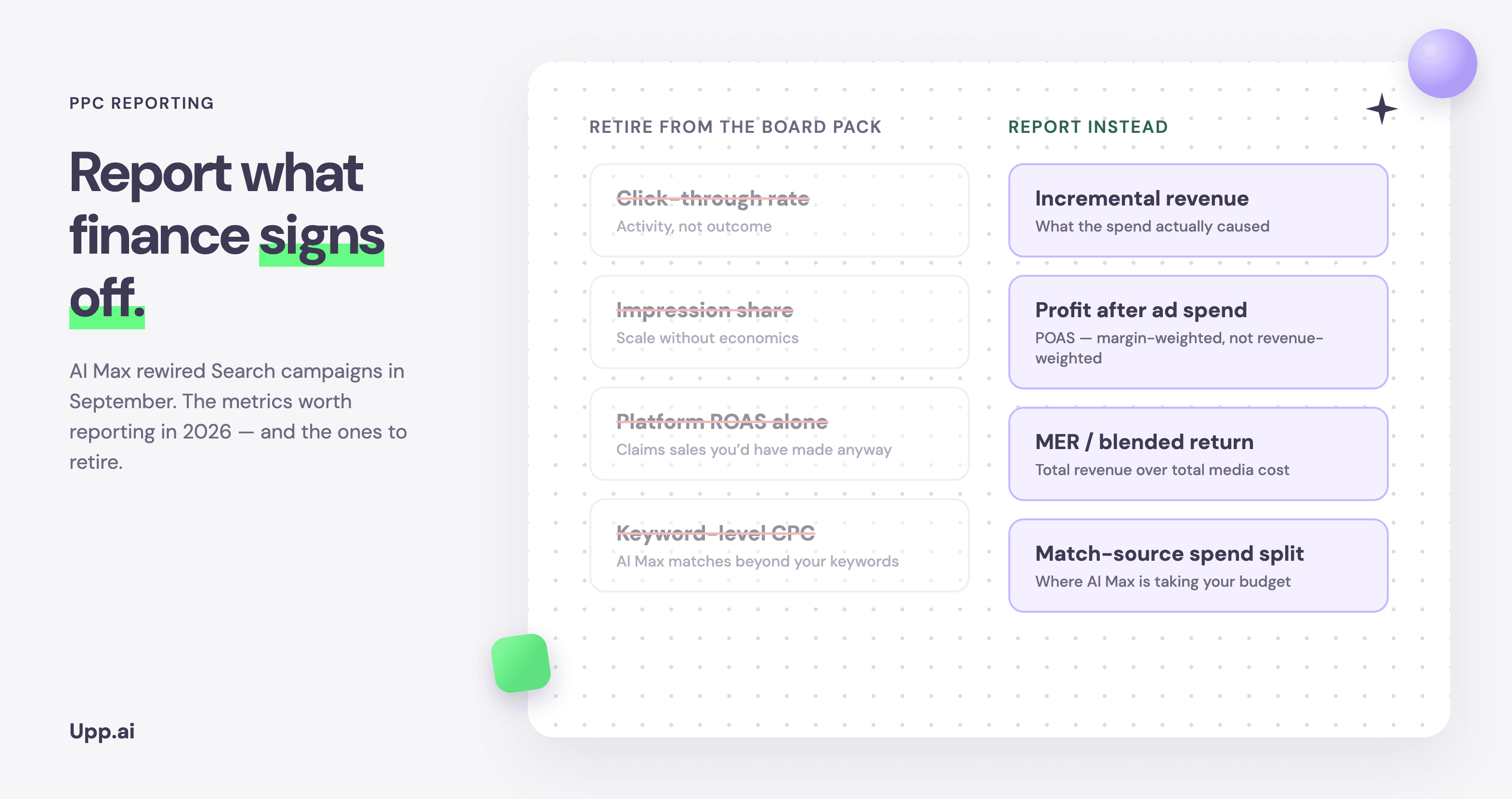
None of these metrics is useless — each has a diagnostic job inside the team. The argument is narrower: they no longer belong in front of decision-makers, because each one answers a question nobody upstairs is asking.
Click-through rate
CTR measures how compelling the auction-winning ad was to the people who saw it. With serve-time text customisation, Google is now partly grading its own copywriting. Either way, CTR is activity, not outcome: a rising CTR with flat profit is a decoration, not a result.
Impression share
Impression share reports your presence in a query universe that AI Max keeps expanding. Scale with no economics attached is exactly the metric that triggers the “spend more” conversation without answering whether you should.
Platform ROAS, presented alone
Platform-attributed ROAS includes every sale the ads touched, including sales you would have made anyway. We've written before about why incrementality replaced ROAS as the measure that matters: finance has started asking for incremental revenue by channel, and a reporting pack built on attributed ROAS can't answer.
Keyword-level cost obsession
With two aggregate rows now hoovering up spend that came from no keyword at all, managing the account one keyword CPC at a time is managing a shrinking fraction of the budget. The economic unit worth reporting is the intent cluster and the product category, not the keyword row.
A report that can't answer “what did the spend cause?” is a record of activity, not a measure of return.
The metrics that matter in 2026
Incremental revenue and incremental ROAS
The anchor metric: revenue that would not exist without the spend, proven against a holdout rather than claimed by an attribution model. Google's own Conversion Lift tooling went self-serve for Search and PMax this month, and independent measurement can run continuously. Whatever the source, this is the number finance will reconcile against the P&L.
Profit after ad spend
Revenue-weighted reporting treats a 10% margin sale and a 60% margin sale as equals. Margin-weighted return — POAS, or simply gross profit minus media cost — reorders which campaigns look good, usually dramatically. For retail accounts with wide margin ranges, this single change does more for budget quality than any bid adjustment.
MER, or blended return
Total revenue over total media cost. Too blunt for optimisation, ideal as a sanity check: when platform-attributed conversions climb while MER stays flat, attribution is claiming sales the business doesn't feel. The divergence between the two lines is itself a metric worth charting.
Match-source spend split
New this autumn, and worth a row in every weekly report: what share of Search spend now flows through AI Max expanded matches and landing-page matches versus your chosen keywords. It isn't inherently good or bad — but its trend tells you how much of the account's behaviour is yours to explain versus Google's.
New customer share
For retail, the same revenue is worth different amounts depending on who it came from. A return that holds while new-customer share collapses is a brand harvesting its own demand. Most platforms now report new-versus-returning well enough to put this in the monthly pack.
Same month, three versions of “return”
Rebuilding the Monday report
A weekly pack that survives 2026 scrutiny is shorter than the one it replaces. Spend against plan. Blended return, with the platform-attributed line beside it so the divergence is visible. Match-source drift. Margin-weighted winners and losers by category. And one exceptions list: what moved more than the threshold you pre-agreed, and what was done about it.
The monthly pack adds the proof layer: incrementality results, new-customer share, and a reconciliation of platform claims against finance's revenue. The discipline that makes this work is pre-agreeing thresholds and definitions with finance once — not re-litigating what ROAS means in every meeting.
The uncomfortable part is what this does to the team's time. Most reporting stacks were built to justify spend: screenshots of platform dashboards, assembled by practitioners, for an audience that trusts neither. Rebuilding the pack means admitting that assembling numbers was never the job. Explaining them — and acting on them — is.
Frequently asked questions
What is AI Max for Search campaigns?
Google's bundle of AI-powered Search features: search term matching that extends beyond your keywords, text customisation at serve time, and final URL expansion. It left beta in 2026; campaigns using campaign-level broad match or automatically created assets were auto-upgraded during September 2026, with Dynamic Search Ads scheduled to migrate from February 2027.
Why did my September 2026 Search reports change?
If your campaigns used campaign-level broad match or ACA, Google migrated them to AI Max between 1 and 30 September 2026. Query mix, matching behaviour and creative assembly all changed, and the migration window includes a learning period — so September is neither comparable to August nor a clean baseline for the future.
What are “AI Max expanded matches” in the keyword report?
An aggregate row showing traffic from broad-match expansions AI Max created from your keywords. Its sibling row, “AI Max landing page matches”, shows traffic matched from your landing pages and assets with no keyword involved. Together they quantify how much spend flows through queries you never explicitly chose.
Which PPC metrics should I report to finance in 2026?
Lead with incremental revenue and incremental ROAS, margin-weighted return (POAS), and blended return (MER) with the platform-attributed line shown for contrast. Add match-source spend split and new-customer share as context. Retire CTR, impression share and standalone platform ROAS to the team's diagnostic layer.
Is ROAS still a useful PPC metric?
As a directional, in-platform optimisation signal, yes. As the headline measure of whether ad spend created value, no — attributed ROAS includes sales that would have happened anyway, and it is blind to margin. Pair it with incrementality testing and profit-weighted reporting before it goes anywhere near a budget decision.
Sources: Google's AI Max upgrade announcement and AI Max reporting documentation; Search Engine Land's migration timeline coverage, 2026. The three-versions-of-return chart is illustrative.
Move your paid media to AI
Report numbers that defend themselves. See how Rubin Measure proves what your spend actually caused.
Keep reading
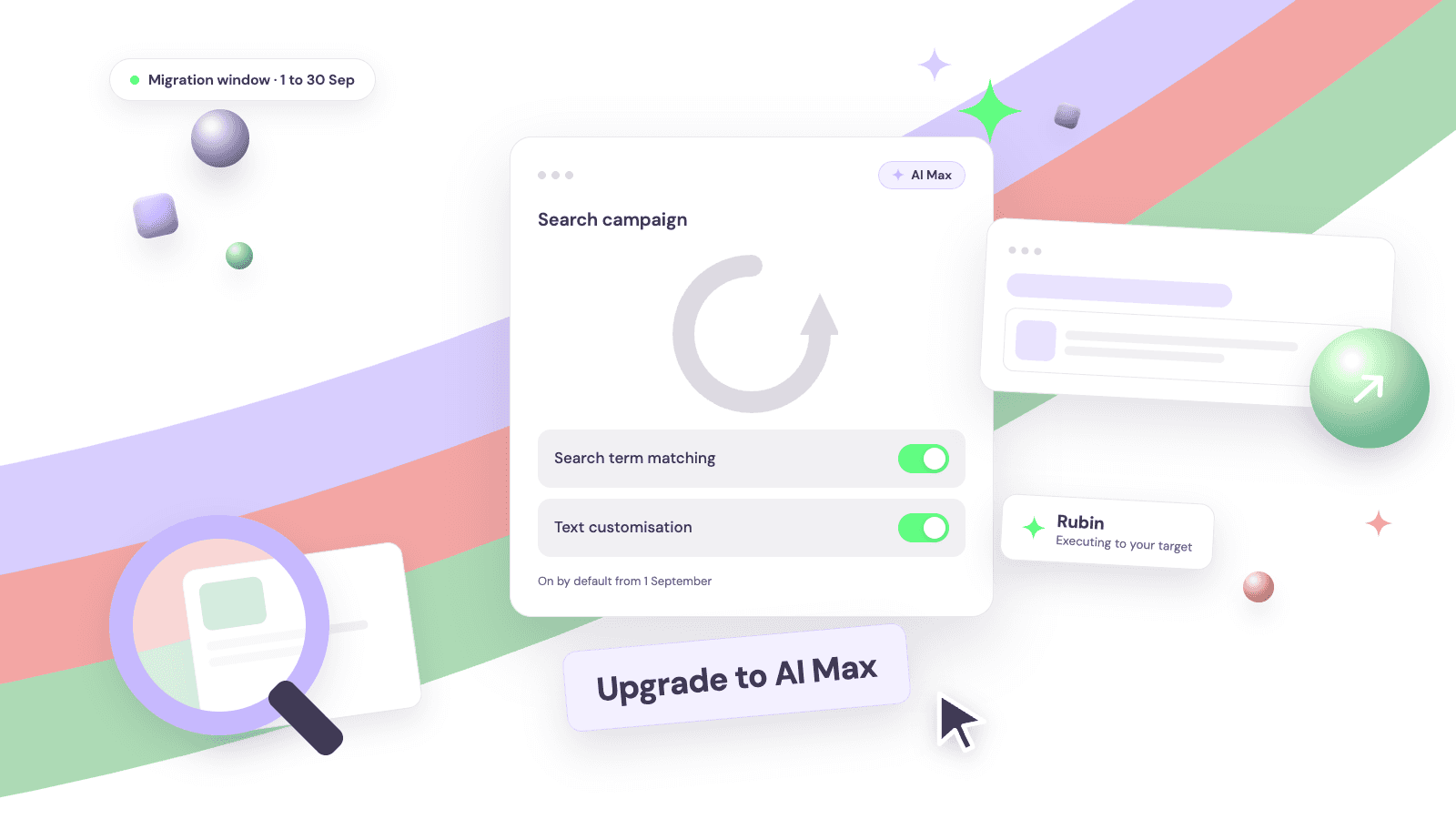
Google AI Max auto-upgrade: what changes on 1 September
Two Search features move into AI Max automatically between 1 and 30 September. What changes, which defaults switch on, and the checklist to run before the window opens.
Upp.ai insights team
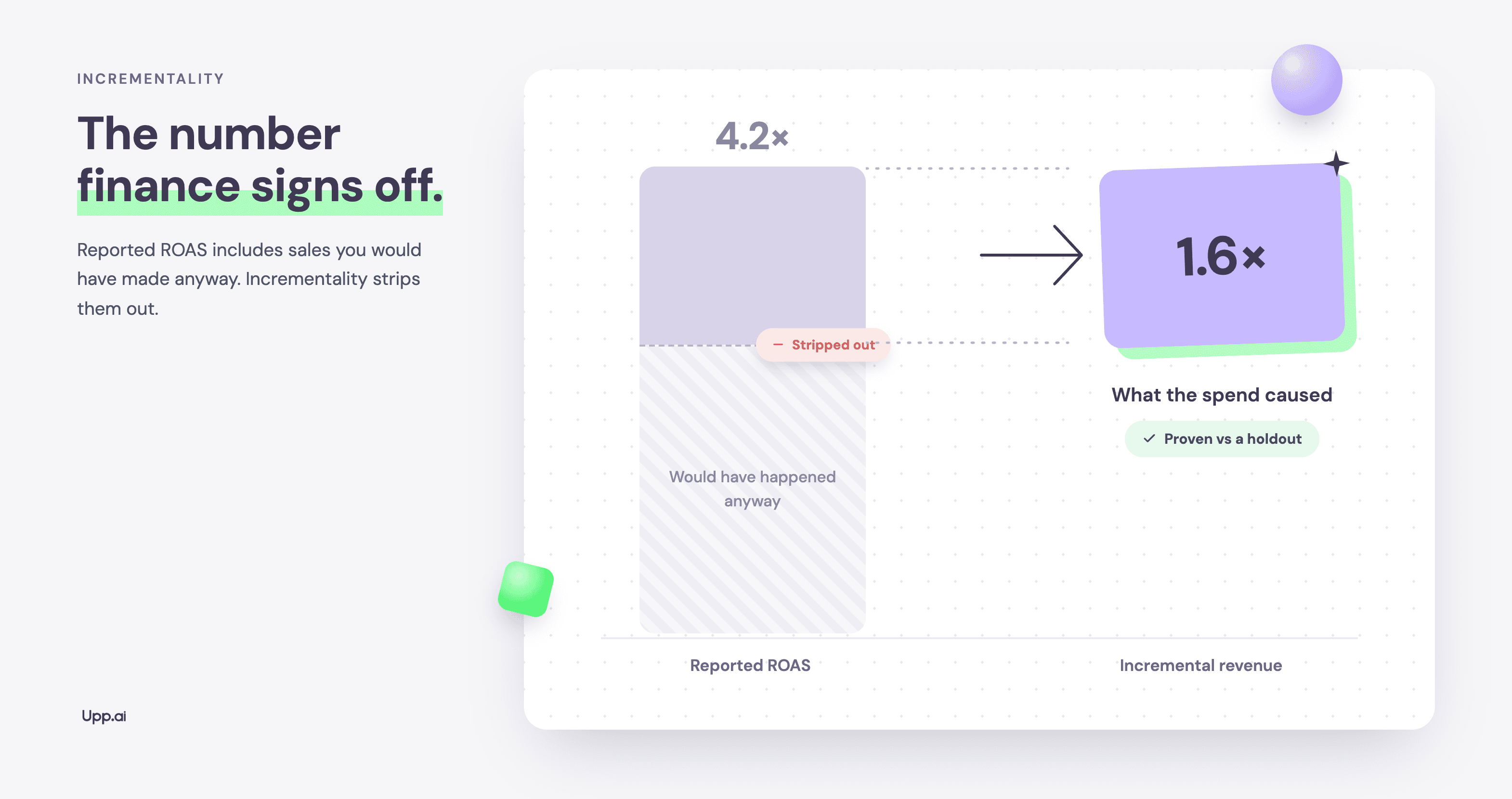
Why incrementality has replaced ROAS as the measure that matters
Finance is now asking a different question, and incrementality is the only lens that answers it.
Upp.ai insights team
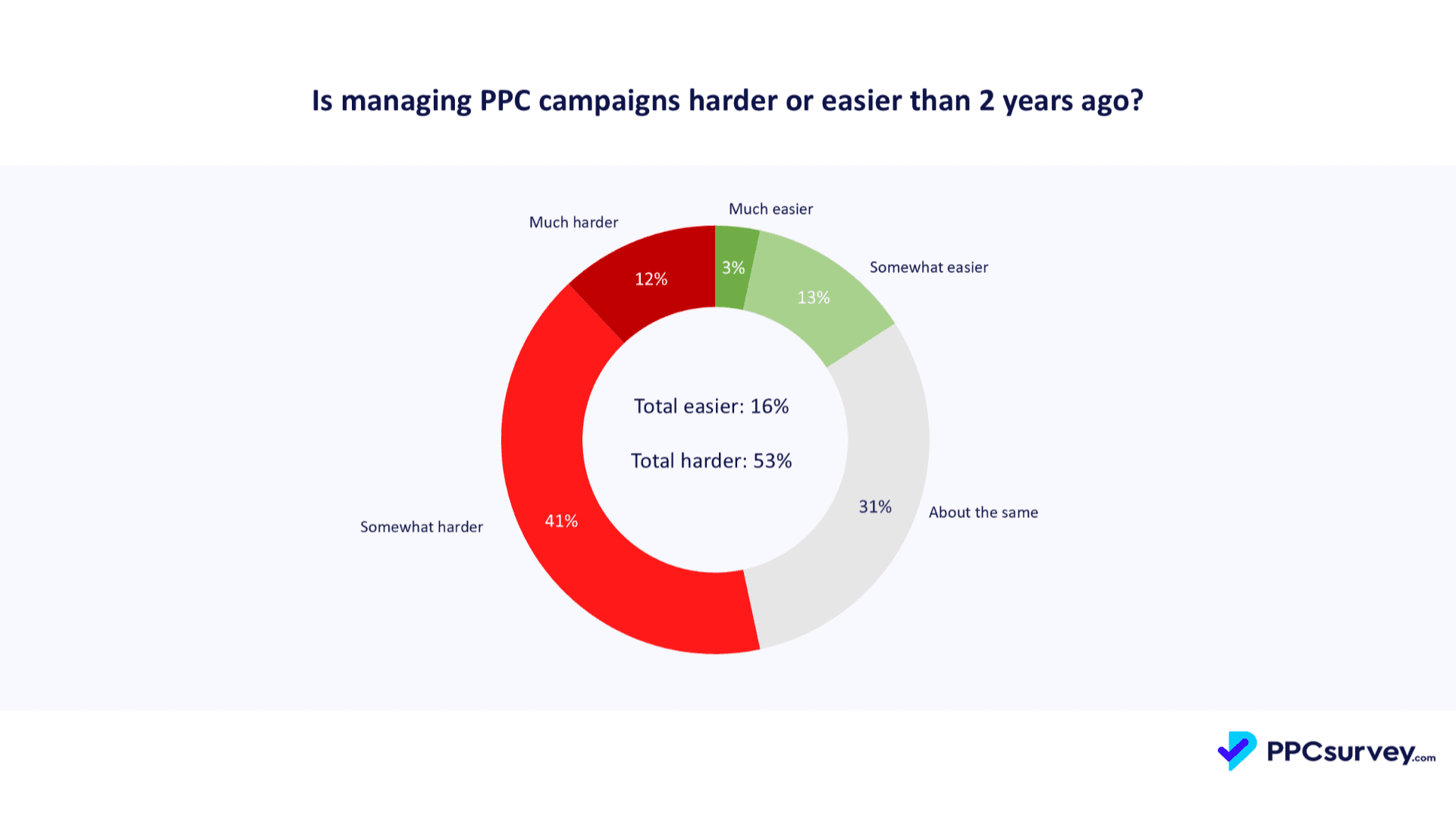
The State of PPC 2026: control is now the scarcest resource in paid media
Global ad spend crossed $1 trillion in 2025. The 1,306 professionals behind the industry's largest survey say the work has never been harder to control, or to prove. Here is what the data actually says, and what the strongest teams are doing about it.
Upp.ai insights team